I received an email from Amazon introducing Askville. It appears to be a very Web 2.0 social website that combines consumer generated knowledge (like Wikipedia) and looks to maintain community and status via “experience points.” Let's see if the content and community help it grow because as MySpace proved, you don't need a good looking site to get millions to flock to it.
Generally, I like the concept of Askville, it seems like other, earlier bulletin boards, but uses more technology to filter out, or tag, those that may be helpful -- and more importanlty those that are not.
After the rush of the holiday season, I will explore it in greater detail.
Happy holidays and best wishes to all of you for a safe and happy new year.
22 December 2006
18 December 2006
Ad Age Online: Top Ten Lists for 2006
Ad Age Online has a few year-end Top Ten lists to close out 2006.
In a question of awareness vs. advocacy, or even utilization, how many of the ten most watched videos had a positive impact on the client's bottom line?
In a question of awareness vs. advocacy, or even utilization, how many of the ten most watched videos had a positive impact on the client's bottom line?
13 December 2006
Notes from the Field turns 1

Notes from the Field, the official blog for Sanctioning Agent celebrates its one year anniversary today. I'm sure you're very excited about this red-letter day.
It started with this post and has since turned into the incredibly insightful and humorous blog that you know and love.
They grow up so fast.
Turning 23? I Don’t Think So

Turning 23 is the latest ill-advised campaign from Dr. Pepper. I have two problems with it.
1. The music is a take on The Vapors 1980 hit “Turning Japanese.” The song widely rumored to be about masturbation with racist overtones. That seems like a weird place to start for commodity-esque awareness campaign. It is almost as absurd as a major cruise line using an Iggy Pop song about liquor and drugs. Then I’m further confounded by what it means to turn 23. Well, this leads to the next point.
2. Doesn’t Dr. Pepper have really one flavor? That’s the Dr. Pepper flavor. That’s it. Beyond the weak brand extensions of cherry vanilla or berries & cream, you just have one flavor in that bottle. Mmm, yes, make sure to swirl the plastic bottle before tasting, let it breathe, and then you can really taste the phosphoric acid and the sodium benzoate. When you’re done, you may notice a slightly nutty aftertaste of high fructose corn syrup and/or sugar.
Barack Obama on MNF

On Monday, U.S. Senator Barack Obama (D – IL) made a special announcement about a “very important contest. A contest about the future… which will ultimately be decided in America’s heartland.” Obama then announces that he’s ready for the Bears to go all the way. You can see the whole thing here.
I thought it was a great set up for the game and boosts the image of both MNF and the junior senator. The intro fits, in a self-referential, mocking way, with campaign countdown to Monday night, as the most important night of the week. For Obama, it’s even better – he receives more positive exposure in the national media, it shows that he has a sense of humor, and that he’s not afraid to take a stand… at least when it comes to the Monsters of the Midway
Kudos to the production team and writers that made that happen.
06 December 2006
The Onion's take on this year's hot demographic
Warning: Language may be found offensive, but also very funny.
The Onion has a great article on this year's hot holiday demographic and their relative spending power.
Holiday Advertisers Seek Coveted Dicktard Demographic
The Onion has a great article on this year's hot holiday demographic and their relative spending power.
Holiday Advertisers Seek Coveted Dicktard Demographic
Rebounding Brands
I received this link from my Fast Company email update. I’m interested in brands. Rebounding brands, even more interesting. But then the “be sure to drink your Ovaltine” moment. Loading, loading… C’mon, who put this schlocky thing together? After it loads, I’m told that Ford and Firestone are on the rebound after the SUV rollovers and the finger-pointing (scapegoating, rather than accountability) that dominated the media a few years back. Ford is hemorrhaging, losing billions. That’s not really a brand on the rebound is it? As my uncle says, even a dead squirrel can bounce.
05 December 2006
Wii're #3!!

Surowiecki (The Wisdom of Crowds) has an interesting article in a recent issue of The New Yorker. It is about Nintendo and their profitable position in the home gaming market. They're not trying to be all things to all people, like MS with Xbox360 or Sony with PS3. They focus on games and are able to acutally make money on their consoles. After reading Surowiecki's article, check out the Fast Company research on all that Sony has at stake when it comes to the PS3 and the PS3 economy.
I have to admit that I'm a sucker for the PS3 campaign, especially the thirty second spot with the baby doll that comes to life as it controls and is controlled by the PS3. A very post-modern (dare we say high modern) ode to structuration and a great awareness campaign.
Thanks to Pam for the article.
Wii: Or the profitable strategy of third place
Surowiecki (The Wisdom of Crowds) has an interesting article in a recent issue of The New Yorker. It is about Nintendo and their profitable position in the home gaming market. They're not trying to be all things to all people, like MS with Xbox360 or Sony with PS3. They focus on games and are able to acutally make money on their consoles. After reading Surowiecki's article, check out the Fast Company research on all that Sony has at stake when it comes to the PS3 and the PS3 economy.
I have to admit that I'm a sucker for the PS3 campaign, especially the thirty second spot with the baby doll that comes to life as it controls and is controlled by the PS3. A very post-modern (dare we say high modern) ode to structuration and a great awareness campaign.
Thanks to Pam for the article.
29 November 2006
It’s about people.
Remember, when it comes to brands and cultivating unique identities:
It’s about people -- it’s humans, in human systems, pursuing human endeavors.
It’s about people -- it’s humans, in human systems, pursuing human endeavors.
24 November 2006
NY Times on WOMM
An interesting article about word of mouth marketing in today's New York Times.
Obviously, researchers want to better understand how people really feel about brands, products, and/or services. Are people advocates for their product? Are they aware of the service? As a side note, from the vantage point of my soapbox, remember awareness (buzz) does not mean advocacy.
I found the article interesting, but would like to know more about the connections one makes with a product or service – what’s driving meaning, motive, identity, or emotion for those keeping a diary? Are WOMM firms looking at that or are they providing a slightly more sophisticated version of Yahoo Buzz or Google Zeitgeist?
I still see some potential after we have filters that can change data-driven noise to actionable information and knowledge. Until then:
BoldMouth has joined with a software company, BuzzLogic, to create a product available in January that will help companies monitor what people say about them on Internet sites. Tracking consumer chatter, though, does not always provide companies with solutions, said Heather Dougherty, senior retail analyst for Nielsen/NetRatings.
“Everyone knows that word of mouth is important, and it’s something that goes on all the time,” Ms. Dougherty said. “But being able to really harness it can be very difficult.”
21 November 2006
Holiday Branding

As Thanksgiving rapidly approaches and we’re deep into the throes of the holiday season, the topic of holiday branding or brand modification came up. Jason and I started discussing holiday/seasonal branding. Jason seemed to have a bit of a bah humbug attitude towards it. I have to say, that I’m for it when it is done well. In this case, done well means:
- it doesn’t send a competing message (devalue the core brand identity)
- it doesn’t generate noise and interrupt the desired customer experience
- it doesn’t violate “here and now” phenomena
- it provides complimentary novelty – keeping the identity and experience fresh
- it positively reinforces the brand and, wait for it… creates value.
Some examples of companies that do it well:
- Caribou Coffee – they utilize snowflakes that involve their Caribou icon and the online store has holiday lights in the header that match the rustic feel of their stores.
- Google – they do a great job of modifying their logo on special days (holidays, the Olympics, etc.) with what they refer to as Google doodles. CNN had a piece about Dennis Hwang, Google’s logo artist, last summer.
- Amazon – which may modify their header but doesn’t change their IA or target area is another good example.
I think part of the success and appeal is that it connects many of us. Alone, it won’t create community, but it is a bit of wink or a tip of the hat that says we’re in this together. In some ways this is like breweries offering seasonal beers. It's the same/comfortable brand year 'round, but there's something special to help mark the seasons. In the case of Summit, I’m a big fan of their IPA and Grand, which are available year ‘round. I really enjoy their Mai Bock, which marks the start of Spring, and their Winter Ale, which helps get you through a long Minnesota Winter. Summit modified their labeling recently and now uses a standard logo and only modifies the name banner. I was a fan of their old Winter logo (pictured above) as that met my criteria for effective holiday novelty.
Have a great Thanksgiving!
More Field Links
Thanks to honorary field agent Jason, I have two more resources for you to enjoy.
First, UX Mag, a great resource for user experience information. Second, Think Vitamin providing "nourishment to help the web grow.
First, UX Mag, a great resource for user experience information. Second, Think Vitamin providing "nourishment to help the web grow.
14 November 2006
Around the web, shiny new things for you to read.
A few things from the web worth checking out. Well, of course there’s a lot more, but here are things that (don't involve K-Fed) as a reader of this blog, you may appreciate.
1. Via honorary field agent Rett, The Ad Feed (also found in the Field Links section) is an aggregator for ad industry related content from providers such as Ad Age and Ad Week.
2. 37 Signals has a great (meta-) post about “flow.” If you are interested in designing a great customer experience, better understanding art, jazz, or building a unique identity, check it out.
3. As a reminder The Vulture is always a good read.
05 November 2006
Megabus, a pragmatic travel option
Recently, a relative came to visit us from Chicago. She took Megabus and her roundtrip tickets only cost $16.00. When it comes to Midwest travel. That's a lot of bang for the bus.
03 November 2006
Seth's take on a righteous restaurant
Recently on Seth Godin’s blog he talked about a restaurant where he enjoys to eating lunch, as the food is healthy and the restaurant allows substitutions and combinations of ingredients. I highlight the post because it’s another example of Righteous, Social, or Pragmatic frames for customer segments. You can read the entire post from Seth here.
He states: "People who care about what they eat go somewhere on purpose. People who don't care, go close or cheap."
In other terms, those that eat healthy are righteous about what they eat and where they go. People who are pragmatic (emotional detachment, ease of use, bang for the buck, etc.) about their choice “go close or cheap.” It's not always about money, but it is always about value.
Do you know your value proposition when it comes to your customer segments?
Takeaways:
1. Righteous, Social, Pragmatic positioning (Symbographics) offer ways to avoid scavenger hunts and the false hopes created by researchers trying to invent a new category of consumers.
2. Symbographics provide a richer understanding of your customers and will take you much further than demographics, psychographics or sociographics.
30 October 2006
Volvo Asks…
Who would you give a Volvo to? If you’re Volvo, no one. What seems to be set up as a contest, to elicit responses “about the people you want to help protect by putting them in one of the safest cars on the planet,” is just another advert.
Their site was recently updated, after some recent backlash, to put “this isn’t a contest” on the flash dominated splash page. Previously, you had to dig into the FAQs to get this question and answer:
C'mon, you're using the word "give" as you troll for submissions -- that's the base premise of many sticky, consumer-generated, community building, hubster kind of promotions.
As A Christmas Story, the Jean Shepherd gem, is just around the corner, this seems to be a be-sure-to-drink-your-Ovaltine type of promotion. When Ralphie waits and waits for his Little Orphan Annie secret decoder ring – now he can decode the message. What does Annie need? Poor Ralphie has his optimism dashed when it’s a promo for Ovaltine– “son of a bitch, a commercial.” I’m sure most of you know the scene, if not watch TNT for any span of time on December 24.
So back to Volvo, is this simply an awareness campaign? How does this drive or support their symbolic identity of safety? Is it a way to gather in-depth, robust, ethnographies about potential customers? Do prize pigs taint your data?
Too many questions, not enough Volvos.
The take aways:
1. Not all buzz is good buzz. Sure, we’re talking about you guys, but I don’t think this is going to convert into sales.
2. Related to “buzz,” awareness does not equate to sales or advocacy.
Their site was recently updated, after some recent backlash, to put “this isn’t a contest” on the flash dominated splash page. Previously, you had to dig into the FAQs to get this question and answer:
Is there a Volvo vehicle being given away as part of the "Who Would You Give A Volvo To?" campaign?
No. The WWYGAVT campaign is intended to make people think about the safety initiatives Volvo has taken in vehicle development and therefore why they would consider a Volvo for the special individuals in their lives.
C'mon, you're using the word "give" as you troll for submissions -- that's the base premise of many sticky, consumer-generated, community building, hubster kind of promotions.
As A Christmas Story, the Jean Shepherd gem, is just around the corner, this seems to be a be-sure-to-drink-your-Ovaltine type of promotion. When Ralphie waits and waits for his Little Orphan Annie secret decoder ring – now he can decode the message. What does Annie need? Poor Ralphie has his optimism dashed when it’s a promo for Ovaltine– “son of a bitch, a commercial.” I’m sure most of you know the scene, if not watch TNT for any span of time on December 24.
So back to Volvo, is this simply an awareness campaign? How does this drive or support their symbolic identity of safety? Is it a way to gather in-depth, robust, ethnographies about potential customers? Do prize pigs taint your data?
Too many questions, not enough Volvos.
The take aways:
1. Not all buzz is good buzz. Sure, we’re talking about you guys, but I don’t think this is going to convert into sales.
2. Related to “buzz,” awareness does not equate to sales or advocacy.
25 October 2006
Cracker: Get off This, Virgin
I have to admit that I don’t pay attention to Tuesday’s new release schedule with the fervor and passion that I used to in high school and college. Perhaps, I’m getting older, or spending to much time in the iTunes, the iTunes store, or on Pandora. But, I saw this about Cracker on Seth Godin’s blog and thought I’d share. Cracker, who had a bit of a falling out with Virgin Records pulled a pretty funny stunt. Virgin, working to get more dollars out of the Cracker catalog, releases greatest hits album. Well, Cracker, on their new/own label, returns the favor by releasing Greatest Hits: Redux on the same day. The redux version has the same track listing. The twist? Redux has re-recorded versions of each song. Which one do think fans would purchase? It’s almost as entertaining as the Wilco saga with Yankee Hotel Foxtrot. Coincidently, Wilco and Cracker are two of my favorite bands and the way in which they've conducted themselves in the face of the record companies only strengthens my emotional connection to these bands. Oh, and I did by a copy of Redux on iTunes?
The marketing take-aways:
1. Don’t be jerks
2. Understand the power of community
The marketing take-aways:
1. Don’t be jerks
2. Understand the power of community
23 October 2006
A rising Tide of insult
Honorary field agent Rebecca, points us to Susan's recent post about Tide. When 25% more is well, kind of like 25% more than a container that doesn't have as much... How much more does it cost? Twenty-five percent more, silly.
In college, my brother worked for Bed, Bath & Beyond. Their circulars that would appear in the Sunday paper made it seem like something was on sale, but they were simply promoting awareness, but hoped that Ma & Pa Sucker would think that the promotion provided great savings.
In college, my brother worked for Bed, Bath & Beyond. Their circulars that would appear in the Sunday paper made it seem like something was on sale, but they were simply promoting awareness, but hoped that Ma & Pa Sucker would think that the promotion provided great savings.
20 October 2006
Blogs & Flogs
Wal*Mart is in the middle of another consumer-generated media SNAFU.
Web log = blog
Fake blog = flog
Wal*Mart & Blogs = Flog SNAFU; a repeated pattern
Here’s a brand truth for you, most brand damage comes from within. When people or organizations don’t “walk their talk” there’s bound to be issues. While not all damage and mishaps are the same you have to appreciate the irony of some recent examples – Mark Foley and Edelman Worldwide. The case of former U.S. Rep Mark Foley (R – FL) has been well documented. The irony that he was making political hay crusading for children while it turns out that he really liked to cruise for kids. His symbolic identity is no longer grounded.
Here’s the skinny on Edelman from AdAge:
So, one that espoused truth and transparency didn’t want you to look behind the curtain. You can read more at AdAge or CNN.
How are customers of Edelman supposed to take them seriously?
Take aways:
1. Make sure your media channels and messages positively reinforce and enhance your symbolic identity. Wal*Mart still doesn’t get consumer generated media – ah, where have all the hubsters gone?
2. Most brand damage comes from within.
3. Don’t lie and don’t be a hypocrite.
4. Group think can happen anywhere.
Web log = blog
Fake blog = flog
Wal*Mart & Blogs = Flog SNAFU; a repeated pattern
Here’s a brand truth for you, most brand damage comes from within. When people or organizations don’t “walk their talk” there’s bound to be issues. While not all damage and mishaps are the same you have to appreciate the irony of some recent examples – Mark Foley and Edelman Worldwide. The case of former U.S. Rep Mark Foley (R – FL) has been well documented. The irony that he was making political hay crusading for children while it turns out that he really liked to cruise for kids. His symbolic identity is no longer grounded.
Here’s the skinny on Edelman from AdAge:
It's ironic that Edelman Worldwide helped to write the Word of Mouth Marketing Association's code of ethics, which states: "Honesty of identity: You never obscure your identity."
Richard Edelman has been apologizing a lot lately for his PR firm's blog -- written by a freelance writer -- in support of Wal-Mart.
Ironic, of course, because the independent firm was publicly slapped -- and publicly apologized -- for being the force behind the Wal-Marting Across America blog that was unmasked as a fake created and paid for by Edelman.
So, one that espoused truth and transparency didn’t want you to look behind the curtain. You can read more at AdAge or CNN.
How are customers of Edelman supposed to take them seriously?
Take aways:
1. Make sure your media channels and messages positively reinforce and enhance your symbolic identity. Wal*Mart still doesn’t get consumer generated media – ah, where have all the hubsters gone?
2. Most brand damage comes from within.
3. Don’t lie and don’t be a hypocrite.
4. Group think can happen anywhere.
16 October 2006
T-Shirt Math, Printing Money Via Chicago
Honorary field agent CJT sends in this article from the Chicago Tribune (you may have also heard about it on 37 Signals. It’s the story of Threadless, a Chicago-based design and t-shirt shop that is building a community around it’s vertical product and service.
When I was in college at Iowa, my friends and I would joke about “t-shirt math.” Don’t over-complicate something, get it done and if it works, it works. We figured, as the article points out, that you could have t-shirts designed for about $5.00 each and sell them for $10-15. Gearing them for the college, rowdy football crowd groups they would have clever sayings like “Muck Fichigan” on them. For the most part, all were money makers. Enough about me, on to the team that is making this work and then some.
Threadless has utilized the net to improve this model and include designers into their community. Here’s the basic concept:
The article highlights some great insights about successful brands, communities, and understanding the symbolic space you wish to own.
1. They’ve embraced common-sense, not business school research.
2. They scaled back on promotions when they realized they “were spending too much time talking about what they do and not enough actually doing it.” In other words, they’re serving their customers and communities – talking to Target and Urban Outfitters doesn’t help them do that.
3. “They’re building and audience and selling them what they want.” They have a community around their brand and are gaining loyalty and grace. People (customers and designers) have used the product, formed an opinion, and are now advocates. Think diffusion of innovation.
4. My favorite quote from the article, highlights a post-modern element of the here-and-now phenomenon:
When I was in college at Iowa, my friends and I would joke about “t-shirt math.” Don’t over-complicate something, get it done and if it works, it works. We figured, as the article points out, that you could have t-shirts designed for about $5.00 each and sell them for $10-15. Gearing them for the college, rowdy football crowd groups they would have clever sayings like “Muck Fichigan” on them. For the most part, all were money makers. Enough about me, on to the team that is making this work and then some.
Threadless has utilized the net to improve this model and include designers into their community. Here’s the basic concept:
That idea: Conduct a running on-line T-shirt design competition. Take the winning des igns and print them on a limited number of shirts, as many as six new designs every week. Sell the shirts to the people who voted (and anyone el se on the mailing list or who visits the site). It's virtually no risk and, if you can build a community of users as large and loyal as Threadless', very high reward.
The article highlights some great insights about successful brands, communities, and understanding the symbolic space you wish to own.
1. They’ve embraced common-sense, not business school research.
2. They scaled back on promotions when they realized they “were spending too much time talking about what they do and not enough actually doing it.” In other words, they’re serving their customers and communities – talking to Target and Urban Outfitters doesn’t help them do that.
3. “They’re building and audience and selling them what they want.” They have a community around their brand and are gaining loyalty and grace. People (customers and designers) have used the product, formed an opinion, and are now advocates. Think diffusion of innovation.
4. My favorite quote from the article, highlights a post-modern element of the here-and-now phenomenon:
"T-shirts are such a fantastic medium," King says. "They're this instant sort of disposable notion of your own identity and you can change it at any moment.
15 October 2006
14 October 2006
Army Strong, McCann Worldgroup Rich

Taps gently plays for “Army of one” the U.S. Army’s tagline for the past five years. While the Army, which achieves many of its goals by ensuring operational effectiveness through the suppression of individual identity for a group identity, Army of one was not a good slogan. Be all you can be still sounds pretty good to me. In comes, the less articulate “Army Strong.” The new slogan, which apparently was a result of qualitative research with Dr. Bruce Banner after he became very angry, is from McCann Worldgroup. The Army account is valued at $200 million annually.
“There’s strong, then there’s Army Strong” claims the new campaign. The Army missed recruiting numbers two years ago and bounced back to exceed its goal of 80,000 soldiers. But as Lee Corso likes to say, “not so fast, my friend. AdAge points out, to hit the numbers, the Army engaged in some Army Dumb (lower aptitude tests) and some Army Misdemeanor (arrests and drunken driving), plus some Army Coin (greater financial incentives) to make sure the Army (is) Strong.
From an identity campaign, this may be the shiny lure to get young recruits to bite, but does this help America feel good about their military or does it help Army alums to continue to feel a part of the symbolic community of the U.S. Army?
From AdAge:
The ads were unveiled today as the Army released year-end recruiting numbers showing it exceeded by 635 its goal of recruiting 80,000 soldiers, a 7,000-soldier increase in the Army's target from last year. The Army has added a number of recruiters and offered bonuses to students for entering the Army.
The Army said 2,600 of the new recruits came in as a result of lower aptitude standards, and there was a slight increase in the number of recruits accepted under waivers for various medical, moral or criminal problems, including misdemeanor arrests and drunken driving.
08 October 2006
Pontiac & The Paradox of Choice
Pontiac, one of the struggling brands, under the GM umbrella has launched a new campaign to support the “Build Your G6” effort makes a surprisingly silly claim. I caught the commercial three times during a college fottball broadcast yesterday. I had to listen carefully the second time, because I couldn’t believe what I heard the first time. Pontiac says that you can customize your Pontiac and that it "offers more combinations of options and accessories than there are drivers in America." I don’t dispute the claim (mix in a lot of unimportant things or smaller items and yes, lots of selections – by the same logic, Burger King could have hundreds of options to mix and match a whopper), I just wonder why you’d pack that piece of brand destroying language into a thirty second spot.
That’s not going to help you turn around your company or positively build your brand. Too many choices are not going to help. Please see my earlier post about choice or go read Barry Scwartz’s The Paradox of Choice.
I’ve said this before, but I believe in the not to distant future GM will make a great case study of what not to do with your brand. Remember, they’re paying companies big money to help them destroy their brand. You would think that brief for this project would have been "drive a commodity mindset for Pontiac and its potential customers."
06 October 2006
Social networking sites are getting "older"
Apparently, when it comes to social networking, twenty-five now constitutes "older."
25 September 2006
Clarity in language and design
Matt, over at the 37 Signals blog Signal vs Noise, has a great post about jargon in language and Chartjunk (Tufte) in the presentation of concepts.
The folks over at 37 Signals are doing a great job on focusing on simplicity and function.
The folks over at 37 Signals are doing a great job on focusing on simplicity and function.
The Clotaire Report: Cracking the Code

I recently read The Culture Code: An Ingenious Way To Understand Why People Around The World Live And Buy As They Do by Clotaire Rapaille. Rapaille is a French-born psycho-analyst, anthropologist, and marketing consultant. Rapaille is also a bit of philosopher in his latest treatise on culture. However, I don’t think that he’ll be celebrated in his home country among the pantheon of great French philosophers. Then again, I don’t think you’re reading this blog to discuss Camus, Sarte, Foucault, or Bourdieu. Although, Bourdieu’s “Language & Symbolic Power” is a great read and his work on symbolic capital is insightful, as we work to deconstruct what it means to live in a symbolically created reality.
Back to Clotaire Rapaille and Culture Code. I was intrigued by Rapaille after seing The Persuaders on PBS. http://www.pbs.org/wgbh/pages/frontline/shows/persuaders/ Rapaille’s description of the reptilian brain is useful in conducting research and audience segmentation – essentially, we don’t need to over-think why one likes our dislikes something. The reptillian brain is why we have Humvees in Manhattan - you can't really explain it logically, but emotionally, well that's another story. For Rapaille it’s either on code or off-code. And the code is simple, or should be. In his opioinin, it should be one word. I feel that some of his descriptions are over-simplified and sound more like an opinionated drunk. To his credit, his discussions of different cultures (in his book he compares and contrasts Italian, U.S., French, German, and Japanese cultures) help illustrate key differences in how culture influences meaning, motive, and identity, as individuals make purchasing decisions.
Qualitative researchers may be interested in his research methods which are built around a three-tiered interview structure. Rapaille tries to get to the deep meaning and emotion behind products and services by structuring his three-hour, in-depth interviews around the following questions:
1. How would you explain this (product/service) to me if I were an alien from outer space seeing it for the first time?
2. Utilizing magazine pictures, which pictures depict how you feel about this product or service?
3. What’s the emotional code – what’s your first memory associated with this product/service?
Those questions, while not exactly novel, help cut to the emotional connection and code associated with a product or service. I dare say its too simple, and not in a good Occam’s Razor kind of way. But, it can be effective.
Overall, Rapaille is doing some interesting work, but his opinions cloud the value of the research.
Now, look back at our picture of the author, from the book jacket and the Random House page for the Culture Code, is that on code or off-code?
18 September 2006
Publishing Plug
I wanted to let readers know that you can now subscribe to Sanctioning Agent’s Notes from the Field. If you’re so inclined, to subscibe, please do so. I’ve added publishing chicklets for Feedburner, Google, Yahoo, Bloglines, and Technorati under the “Field Links” section of the blog.
I hope it helps you keep up-to-date with Notes from the Field.
End transmission.
I hope it helps you keep up-to-date with Notes from the Field.
End transmission.
Lovemarks and agency as commodity
More on LOVEMARKS. Hoag Levins and Ad Age editor, Jonah Bloom, discuss Kevin Roberts, his book LOVEMARKS, and the ad agencies as commodities, in the lastest edition of Why It Matters.
Aww, coming up with ideas is hard, pouting is easy
Via AdAge, three ad agency creative chiefs last week criticized the account pitching and compensation models that currently govern their business relationships with advertising clients.
I don’t think it’s just the that part of the model that’s broken. How about the results? If you don’t move the dial and generate more income or sales for your clients, do you give the a refund?
I don’t think it’s just the that part of the model that’s broken. How about the results? If you don’t move the dial and generate more income or sales for your clients, do you give the a refund?
17 September 2006
13 September 2006
iTunes 7

I just loaded iTunes 7 and its new album-cover-art-view absolutely rocks!!! Kudos to the design team on the image presentation and the flywheel motion.
12 September 2006
Design Issues and Problematic Polls
It’s primary day in a few states, including Minnesota. Seth Godin highlights the problem with ballot designs in New York.
While most readers of this blog are two to three standard deviations above the mean, where the tail is so thin it’s nearly transparent, not all voters are able to track the meaning and impact of their ballot. The design on ballots is like reverse on a car, you don’t use it that often, but when you need you really need it.
While most readers of this blog are two to three standard deviations above the mean, where the tail is so thin it’s nearly transparent, not all voters are able to track the meaning and impact of their ballot. The design on ballots is like reverse on a car, you don’t use it that often, but when you need you really need it.
11 September 2006
Breakaway Brands: Ten companies that boosted their fortunes by cutting down on hype and connecting with customers.
The subtitle of this recent article Fortune, by Ellen McGirt, (via CNN.Com) says it all. Less with the hype, more with the meaningful customer connections.
This study of “breakaway brands” (see article for methodology) by Landor Associates highlights three essential components when it comes to break away brands – 1) trust, 2) community, and 3) a knowledge sharing dialogue.
This study of “breakaway brands” (see article for methodology) by Landor Associates highlights three essential components when it comes to break away brands – 1) trust, 2) community, and 3) a knowledge sharing dialogue.
Three unmistakable themes bubbled up from this year's survey, and most of the breakaway companies are standouts in at least two of them. "Today it's all about trust, community, and creating a dialogue with your customer that shares real knowledge," says Hayes Roth, chief marketing officer for Landor.
08 September 2006
Why It Matters: Branding Iron
In the latest edition of Why It Matters, Hoag Levins interviews William Jeanes, the co-author of the new book Branding Iron. Jeanes is the former editor of Car And Driver. Branding Iron looks at the identity problems plaguing the U.S. auto industry.
Here’s a snip-it from the interview that I found the most interesting:
It sounds like the U.S. auto industry is more of a commodity industry than many execs care to admit. A sign that you’re in a commodity industry, when prices and financing options are the key points in your commercial. Another sign, a loss of your consumer advocates and repeat buyers. Jeanes says that a brand is a promise wrapped in an experience. In other words, advertising does not equal successful brand building.
Many people may want to blame market research and a dysfunctional addiction to research... and for the most part that’s fair. Research, like computer programs, is a garbage in, garbage out endgame. What are you doing to ensure that you are asking the right questions and segmenting your market in meaningful ways? What are doing to cultivate and ground a unique symbolic identity?
Here’s a snip-it from the interview that I found the most interesting:
“In your book you say ‘the car business spends more on consumer research than any endeavor other than politics. Much of its research is syndicated and available to everyone – buyers studies, shopper studies, consumer satisfaction index, etc.’ And what that makes me wonder is that if all the car companies are creating brand identities based on exactly the same study data, how can any of them expect to have products that stand out from each other.”Jeanes argues that courage is what’s missing. The courage to say that we’re all playing in a ‘me too’ environment and failing to connect with consumers in a meaningful way. You can hear more on the AdAge/Why It Matters site.
It sounds like the U.S. auto industry is more of a commodity industry than many execs care to admit. A sign that you’re in a commodity industry, when prices and financing options are the key points in your commercial. Another sign, a loss of your consumer advocates and repeat buyers. Jeanes says that a brand is a promise wrapped in an experience. In other words, advertising does not equal successful brand building.
Many people may want to blame market research and a dysfunctional addiction to research... and for the most part that’s fair. Research, like computer programs, is a garbage in, garbage out endgame. What are you doing to ensure that you are asking the right questions and segmenting your market in meaningful ways? What are doing to cultivate and ground a unique symbolic identity?
07 September 2006
All Symbolic Identities Have Shelf Lives
All symbolic identities have a shelf life here's a perspective from Seth Godin. I may explore this topic in greater detail on "Notes From the Field" in the future.
05 September 2006
Lovemarks nets a $430 million fan
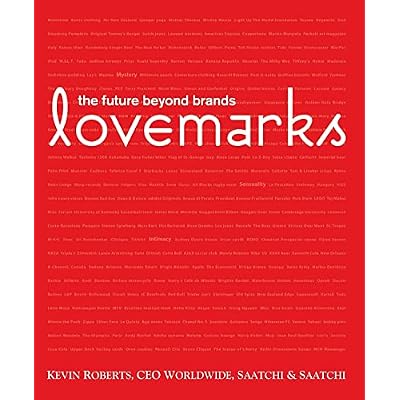
AdAge reports that Kevin Roberts, CEO Saatchi & Saatchi, and his book Lovemarks wooed JC Penny away from DDB Chicago. I had read Lovemarks last winter and thought it was OK, but reread it after I saw the AdAge piece. If that’s worth $430 million, I can start highlighting ideas on my blog that should be worth a few million a pop.
I stand by my “ok” assessment on my first read. The book is interesting, more so for its presentation and graphics than the content. The premise is that emotional connections with customers are what make a relationship between customer and product/service. No big news there, emotional connections are important. Roberts argues that love is the top emotion and claims that the future beyond brands is lovemarks. I’m still a bit befuddled by the future beyond brands, but what’s a book subtitle if not provocative.
Roberts seems to treat the concept of a brand more as a commodity. I think he’s wrong in doing that. I concede that many marketing people try formulaic approaches and pseudo-science which treats consumers more like sheep than humans. Hello Dolly! However, lovemark is really just a strong brand or symbolic identity.
I too try to stay away from the term brands at times, saying that what a person or organization is striving for is a unique symbolic identity. While I agree that emotion is critical in winning the hearts, then the minds (it’s easier to find reason afterwards), it’s more than emotion when it comes to a winning symbolic identity. Unique symbolic identities address human meaning, motive, identity, and emotion. As I mentioned in my critique of Primal Branding, emotion is necessary but not sufficient in developing and grounding a unique identity.
Roberts talks about love, or lovemarks, being comprised of mystery, sensuality, and intimacy. This is where I think Roberts provides strong insight into human connections to brands, lovemarks, or symbolic identities. When he talks about mystery, he’s referring to great stories, myths, dreams, and icons. When he talks about sensuality, he’s referring to the senses – sound, sight, smell, touch, and taste. When it comes to intimacy, Roberts, says that’s “commitment, empathy, passion.” These are important concepts for marketers to consider as they fight the evils of commoditization.
In the cocktail version of the lovemarks story, presented as a photo of cocktail napkin, Roberts shows that at heart he’s really a social scientist as he presents a two-by-two matrix, with one axis as love (low and high) and the other axis as respect (again high or low). In the desired quadrant of high respect and high love, you have a lovemark, the exact opposite of a commodity. Again, I think that lovemark is synonymous with a winning brand or symbolic identity. Interestingly enough, Roberts has fads as low respect, high love. I agree with that assessment, but wished he would have dug a little deeper into the shelf life of fads, or all symbol systems and identities. They will all expire. I’m not sure if Mr. Roberts sees that with lovemarks.
In addition to a discussion of the shelf life of an idea or lovemark, I would have liked for Roberts to separate awareness from advocacy. I see so many marketers talk about awareness and buzz as if it’s all good. It is not. You need awareness, but awareness alone does not constitute success.
You can read more on the lovemarks site.
27 August 2006
Starbury: New Basketball Shoes for $14.98
Stephon Marbury, guard for the New York Knicks is endorsing a new shoe called Starbury. The shoe share his nickname. Instead of the standard $100 - $200 pricepoint for standard NBA star-endorsed shoes, the new Starbury will retail for $14.98. More details can be found at ESPN
While Marbury may not have the universal appeal of Jordan, or D-Wade, the price should be right for many. Marbury and those around him claim the shoe is the same as the more expensive shoes. (I can’t find a site or citation, but on ESPN's Outside The Lines today, the story claimed the designers for Starbury are the same as those used by Nike for their more expensive sneakers).
Marbury and the Starbury play to a pragmatic drama (more bang for the buck). Will it catch on? I’m curious to see how this one plays out - beyond the business and brand element, I find the social and cultural potential fascinating. Marbury states he’ll be wearing these shoes in the up coming season.
The pricing strategy here should be another lesson in brands – price and features can be duplicated, the emotional connection and symbolic identity cannot. The Starbury provides a pragmatic drama in the world of basketball shoes.
23 August 2006
Why So Many Automotive Ad Strategies Miss the Mark
While Al (and Laura) missed the mark on divergence, I agree with him on automotive advertising. This insight goes beyond the auto industry.
Two key points:
1. The strategy and tactics need to support your goal:
2. The message needs to be geared for the right audience:
Two key points:
1. The strategy and tactics need to support your goal:
Copywriter Julian Koenig once said, "Your job is to reveal how good your product is, not how good you are."
2. The message needs to be geared for the right audience:
Selling to boardroom rather than consumer. It used to be that the objective of an advertisement was to sell something to a consumer. Today, the real selling takes place in the boardroom, where the agency tries to sell the advertising to the client.
21 August 2006
Improv & Innovation: The Power of Yes
While working on a change management and communication project for a client, we were discussing ways in which one (or teams) can build trust. I had discussed the improv approach. I used to write sketch comedy in college and my wife was in a touring improv group for four years. One of the basic tenants of improv is to say yes to an idea first, rather than no. Instead of playing whack-a-mole when it comes to creativity, try saying yes and building on an idea. It may seem simple, but it can have transformative effects when it comes to innovation, trust-building, and team-building.
Get to the point already. I didn’t say it helps you to be succinct. You can read more about improv and innovation in John Sweeny’s book Innovation at the Speed of Laughter. Also, check out this video of John Sweeny presenting. Your next presentation might just seem a whole lot easier.
Get to the point already. I didn’t say it helps you to be succinct. You can read more about improv and innovation in John Sweeny’s book Innovation at the Speed of Laughter. Also, check out this video of John Sweeny presenting. Your next presentation might just seem a whole lot easier.
20 August 2006
Get the RSS on the BS of 2.0

Via Digg, I found this Web 2.0 BS generator. From there, I was able to create this sexy new Web 2.0 compliant logo.
17 August 2006
Wize.Com: The wisdom of algorithms and aggregated reviews
Wize, a new product review site, released its beta today. The site is a service centred around their Wize Rank™, which is based upon the theses from The Wisdom of Crowds and The Pardox of Choice. Check it out.
From the Wize.Com beta site:
From the Wize.Com beta site:
Wize Rank™
Wize Rank is an objective measure of collective wisdom from hundreds of thousands of reviews from thousands of sites across the internet.
We are constantly compiling review data, using our proprietary algorithm to objectively rate products from zero to 100. Because we believe in the value of collective wisdom, a product needs at least five reviews to receive a Wize Rank. As more reviews are added, the Wize Rank becomes more accurate. Vastly simplified, our formula looks like this:
Expert Reviews + User Reviews + Buzz = Wize Rank
Wize Rank does not play favorites - manufacturers and advertisers can't buy a higher rating. The only thing that can improve a Wize Rank is more positive data collected from independent sources.
Is the top ranked product always the best for you? No. Although the top 5 ranked products are generally great, you may find a lower-ranked product that's right for you. Reading what reviewers are saying can help you understand more specific information about a product, and can help you make the right purchasing decision.
Our goal is to help you quickly find the products that are right for you. We think the best way to do that is to highlight the top performers in each category, and to allow you to dig into the detail.
15 August 2006
More about What Sticks; Interview with Greg Stuart
More about What Sticks from AdAge. This interview further explores how billions of dollars are lost on poorly researched campaigns.
Perhaps the dollars spent, and lost, on “I know it in my gut” is making you queasy.
Looking for a pragmatic way to conduct meaningful research to discern meaning, motive, motivation and identity among our your core audience segments? Contact Sanctioning Agent to explore which services can help you own your identity.
14 August 2006
The Origin of Brands or How I Wasted $14.95

My Amazon search engine let me down. I know that Al Ries has contributed quite a bit to the body of popular knowledge around advertising, positioning, and PR, but man was “Origin” a waste of time and money. Published in ’04, Al & Laura (Al’s daughter) use Darwin’s theory of evolution as a guiding principle for brands. Their thoughts about divergence (when species branch off or diverge to fit a special need as they adapt to survive) is interesting, but interesting in the way a half-baked hypothesis is interesting after a pint or two at the pub. Team Ries seem to despise all the hype about convergence and give poorly illustrated examples about how products and services don’t work well (utilizing a Swiss Army knife as metaphor) when they try to be many things. Two years is all it takes to start to poke holes in their anti-convergence arguments as we see industries and products readjusting to the best ways to build, own, and deliver digital content. I believe that a major component of the book that is missing is audience meaning, motive, and identity, as people utilize products are services.
While some of the hard sciences, physics and biology especially, provide rich metaphors for the understanding of communication and brands, I feel that divergence is not the one anchor an argument. As all symbolic identities are organic and have shelf-life, an adapt or die understanding of specialization could have been more useful. An analog from physics could have been entropy and neg-entropy as systems come together or fall apart. From physics we could also have a Zen-like lesson, transcending the dualities of quantum physics and quarks – the rules for the movement of large objects don’t apply to the movement of small objects. I believe that all science (social, pseudo, or otherwise) still seeks the silver bullet of a unified theory. It is safe to say that divergence is not it – it will explain parts of a brand’s survival, but is too specialized to be taken seriously. No matter how many times it is repeated, it is not true. The book reads like the current administration’s communication philosophy, if you say it enough people will believe you.
11 August 2006
Will they keep the oil can?
I’ll say this now. Foster’s is not going to improve sales (beyond awareness-driven trial purchases) with its new campaign. It’s not going to stick. They’re tryin to repeat the social positioning of Heineken and Corona. Remember you need to be symbolically unique AND you need to ground that unique identity. More bluntly, don’t be all things to all people.
The new tag has my Sanctioning Agent senses tingling – as in “DANGER!!! No, don’t do it.” The new tagline is "Crack open a friendly." Wha’? I remember an interview with Nicole Kidman (another popular Aussie export) with David Letterman and she used the phrase “crack a fat” which was slang for an erection. So, crack open a friendly may have an unintended double entendre for more explicit social dramas.
So long Foster’s, we hardly knew ye.
08 August 2006
What Sticks
From AdAge.Com, a review of the forthcoming book What Sticks, by Rex Briggs and Greg Stuart, highlights some of the dysfunction that translates in millions billions of dollars wasted in advertising and marketing efforts.
From the review:
Some marketers may argue BLINK, but it’s the definition of group think:
To what extent are you defining success before a campaign starts? Do you know why your customers (suspects, prospects, returning, or otherwise) are motivated to utilize your product or service? $53.5 billion in waste on motivation alone, according to Rex Briggs (in an audio interview on his company's site). Not understanding the motivation then translates into poorly designed message. Briggs claims over $38 billion then is wasted as the message doesn’t account for motivation. That’s over $88 billion in advertising spend lost due to an inability to understand and message to its core audience.
I used to work with a group of web developers who used the work motto "suck less." For marketers wasting less would be a healthy start to providing greater value for their organization or clients.
UPDATE 8/14/06 - More Audio (AdAge interviews Greg Stuart)
From the review:
Unable to define success Ad agencies, the target of nearly nonstop flagellation both self-inflicted and otherwise in the past decade, may find some solace in the book. It pins much of the blame for marketing's woes on marketers and their failure to even define success for campaigns at the outset -- much less measure it properly on the back end. Of the 36 marketers the authors researched, only ttwo -- P&G and Cingular -- had a clear definition of success for each marketing effort at the outset, Mr. Briggs said in an interview.
Some marketers may argue BLINK, but it’s the definition of group think:
The authors discovered that many longstanding axioms of media planning were based on nothing more than hunch and legend. They reveal how frequently marketers disregard research when it doesn't jibe with their own opinions -- or seek out research that does.
To what extent are you defining success before a campaign starts? Do you know why your customers (suspects, prospects, returning, or otherwise) are motivated to utilize your product or service? $53.5 billion in waste on motivation alone, according to Rex Briggs (in an audio interview on his company's site). Not understanding the motivation then translates into poorly designed message. Briggs claims over $38 billion then is wasted as the message doesn’t account for motivation. That’s over $88 billion in advertising spend lost due to an inability to understand and message to its core audience.
I used to work with a group of web developers who used the work motto "suck less." For marketers wasting less would be a healthy start to providing greater value for their organization or clients.
UPDATE 8/14/06 - More Audio (AdAge interviews Greg Stuart)
07 August 2006
50 Million Blogs Can't Be Wrong

David Sifry's "State of the Blogosphere" shows a phenomenal growth curve and is nicely illustrated with graphs from Technorati.
The blogosphere has been doubling in size every 6 months or so. It is over 100 times bigger than it was just 3 years ago.
Podcasting the death knell for HD Radio; TV losing its grasp
Traditional media in its digital and analog formats are losing their lifeforce – all good things, I suppose. Identities and mediums have a shelf life and online media is putting older formats in the old media home.
First, Stephen Hill claims HD Radio is DOA and podcasting is to blame.
Do you know how to translate your brand online?
Thanks to honorary field agent Cory for the Stephen Hill article.
First, Stephen Hill claims HD Radio is DOA and podcasting is to blame.
"System thought leaders and power players are finally united in the realization that digital delivery will happen most powerfully online and will do a far better job of supporting the underlying public service mission of the industry. They are now actively working on a comprehensive plan to do it by aggregating both infrastructure and content to support emerging composite business models," says Hill.The convergence of media and the changing of channels reshuffles the deck. Reaching an intended demographic becomes more challenging. McKinsey is reporting that TV is losing its power and reach. From AdAge:
That shocking statistic, delivered to the company's Fortune 100 clients in a report on media proliferation, assumes a 15% decrease in buying power driving by cost-per-thousand rate increases; a 23% decline in ads viewed due to switching off; a 9% loss of attention to ads due to increased multitasking and a 37% decrease in message impact due to saturation. (snip)
According to Forrester Research's most recent North American Consumer Technology Adoption Study, people ages 18 to 26 spend more time online than watching TV and are adopting new technology faster than any other generation. Because of that, they tend to be more receptive to blog, podcast and mobile-web ads.
Reinforcing the difficulty in capturing the attention of the youth demographic, the LA Times describes how 12-24-year olds are simply underwhelmed. No wonder MTV gave up on videos they're like three minutes long, man.
While TV’s clarity and simplicity, which may seem like elegance to some and a dinosaur to others, will retain viewers for some time – especially those over 30, it appears like revenues for online venues should continue to climb at an accelerated pace.Do you know how to translate your brand online?
Thanks to honorary field agent Cory for the Stephen Hill article.
06 August 2006
The SOAP Virus Spreads

Snakes On A Plane (SOAP) - the viral movie sensation of the year continues to shine. From the blog-driven hype machine that landed a cover on EW to calls from the star SOAP is on a roll. You can now construct a call from Samuel L. Jackson to a friend, co-worker, ex-spouse, etc. reminding them to see the best movie ever on August 18th.
This viral campaign is spreading so fast the CDC is nervous.
(hat tip to Kevin at Soflow for the 411 on the SOAP call)
04 August 2006
iPod will continue to spread; satellite radio slumps
Reaching drivers just became a bit more difficult.
Apple has inked with car manufacturers, including BMW, Acura, Audi, Ferrari, Honda, Nissan and Volkswagen. This will continue to expand the presence of iPod (and possibly bring other Apple products along for the ride as a latent effect). This is a blow to traditional radio and satellite radio.
Apple has sold over 58 million iPods. It works, it's a good product, it's easy and it turns out very viral. Now, let's look at another form of digital media -- satellite radio. Even with Howard "King of All Media" Stern, the industy slumps, sags, and drags. Apple making sure that it is even easier to use your iPod in the car is another blow for the folks over at Sirius and XM who continue to experience losses. Subscriber acquisition costs seem to play a huge factor here.
So the question for marketing professionals: How are you going to reach your target market during drive time? According to Arbitron, about one-third of all radio listening takes place in the car.
Media convergence and the blurring of channel lines becomes more and more interesting. Ten years ago, did you think you’d be able to take your music, calendar, contacts, and videos with you in a phone or iPod? Don't say yes because you hadn't heard of iPod and your phone had limited coverage -- you were happy that it had an address book. You could call all of your friends and brag about your new Sony Discman.
26 July 2006
Ram Rash or How I Got A Case of the Dodge in Europe
Ram Rash?
This seems to be the flip side of the Dr Z campaign in Europe, as Daimler-Chrysler starts to come together as a unified company. Is Ram Rash contagious? What's the viral capability? Ram Rash was first identified by honorary field agent Jason.
Is Dr. Z too Euro for America? Is Dodge too American for Europe?
UPDATE: JULY 31 From AdAge
It seems as though a basic step in uncertainty reduction was missed, as seven of 10 potential consumers surveyed didn't know that Dr. Z is a real person, let alone the CEO. Ouch. $221mm has been spent on the campaign so far.
24 July 2006
The Hubster Disaster or Co-Opted to Death
I went back to the WalMart social marketing site to see how the School Your Way/ Hubster disaster is taking shape. Perhaps I'm a glutton for punisment.
I have to believe that most traffic to this site is analogous to a gawker’s delay. It’s a car wreck – a completely sublime, yet intriguing, event that’s awful. You try and you try, but you can’t take your eyes off of it. This campaign is like Mike Peters (Jon Favreau) vs. the answering machine in SWINGERS. Painful and entertaining -- they'r not going to do something that stupid again...oh, yes they are.
My favorite part is the FAQ section of the site:
Sweet indeed.
Is Sony a new kiss of death when it comes to youth marketing? They teamed up with Ford for the ill-fated Flash Mobs.
I have to believe that most traffic to this site is analogous to a gawker’s delay. It’s a car wreck – a completely sublime, yet intriguing, event that’s awful. You try and you try, but you can’t take your eyes off of it. This campaign is like Mike Peters (Jon Favreau) vs. the answering machine in SWINGERS. Painful and entertaining -- they'r not going to do something that stupid again...oh, yes they are.
My favorite part is the FAQ section of the site:
WHO’S BEHIND THIS GENIUS WEB DESTINATION?
The guys from Wal-Mart and Sony®
teamed up to bring you all the sweet stuff you’ll find on the HUB!
Sweet indeed.
Is Sony a new kiss of death when it comes to youth marketing? They teamed up with Ford for the ill-fated Flash Mobs.
22 July 2006
Zune - iPod Throwdown
Microsoft Zune to compete with Apple's iPod. In hindsight, this post from a few months back must have been when the creative teams at Microsoft were working to develop Zune's packaging.
How well will Zune do? Will it crash as much as most Windows products? Will it fair better than the Sony Bean, the Dell DJ, etc.?
How well will Zune do? Will it crash as much as most Windows products? Will it fair better than the Sony Bean, the Dell DJ, etc.?
21 July 2006
Gah-gah for Google - Web Giant's Revenue Accounts for 24% of Total Online Income
From Ad Age
I'm interested in the cost-per-click advertising alternative descibed at the end of the article.
Published: July 20, 2006 NEW YORK (AdAge.com) -- For the seventh time in eight quarters, Google beat the expectations of Wall Street, reporting today that it more than doubled second-quarter profit in comparison to last year. Google's strong earnings look all the more impressive in contrast to those of its main search competitors, Yahoo and Microsoft.
I'm interested in the cost-per-click advertising alternative descibed at the end of the article.
20 July 2006
Primal Branding: Response & Reaction Part III (Conclusion)
To wrap up the discussion (lecture?) and critique of Primal Branding, I want to highlight where I think Hanlon could extend his research. Two key sections are the (1) shelf-life of a brand, identity, or community belief system; and (2) the competing reasons why one may participate in a rhetorical vision/community and carry a particular symbolic identity.
Rhetorical Vision Lifecycle: The Shelf-Life of a Brand
Without a theory, you can’t tell a fact from a non-fact. You don’t know if something is valuable or not, or why something may be important. A theory provides a lens to view the universe of phenomena in a meaningful way. SCT gives us the ability to see, understand, explain and predict symbolic phenomena and human behavior. When it comes to groups, teams, tribes, and communities, we have a parsimonious way to understand behavior (meaning, motive, identity, and emotion) by using the SCT lens.
Rhetorical visions (i.e. belief systems), are a living organism – they have a predictable lifecycle. The lifecycle can be shortened or extended (if you know what buttons and levers are useful in adjusting and framing the vision). The vision can be viral and spread like wildfire. However, your vison/campaign can also be inoculated against (competing visions become more compelling), or simply lose their life force.
The Life Cycle has five stages:
Consciousness Creating – the vision is created.
Consciousness Raising – the vision is raising awareness and chaining out.
Consciousness Sustaining – the vision is kept alive and must defend against competing visions.
Decline – the ‘old’ vision is being replaced by another ‘vision’ (think diffusions of innovations)
Death – the old vision dies and has no currency in the symbolic marketplace.
While all rhetorical visions go through these stages naturally, the timelines and accelerated or slowed down through a few examples:
Artistry – to what extent are the story tellers continuing to hold the attention of (and inspire) the cue-givers and the masses.
Here & Now – the vision is always in competition with other visions, to what extent can the keepers of the vision ground the drama in the here-and-now reality of its participants.
Inoculation – protect from competition, protect the core idea (the seeds of a rhetorical vision’s destruction are sewn in its genesis story).
Novelty & Redundancy – related to inoculation and the here-and-now phenomena, to what extent is the vision reaffirming and refreshing.
Position Structure
While people may participate in the same vision, they may get there for different reasons. As stated in an earlier post on this blog, we live in symbolically created world -- sometimes the rhetorical visions that make up our symbolic world overlap and sometimes they don't. Our symbol systems and world views can be segmented into seven symbolic visions or dramas. This is the foundation for Symbographic research. These dramas provide a lens through which we can see the way communities, tribes, organizations, customers segment and organize. The visions are righteous, social, pragmatic, social-righteous, social-pragmatic, righteous-pragmatic, and no vision. From a brand perspective, having no vision a dangerous place to be, as the market will position you. We can see this in the recent examples of Chevy and Walmart fighting their positioning as they try to grab the youth market.
It’s imperative to understand these competing (righteous, social, pragmatic) reasons for a vision or symbolic identity’s existence. They help you frame your story and “sell” your point of view.
Post Recaps: SCT Take-aways:
To end this series of posts on Primal Branding & SCT, here are a few take-aways:
* Without a good theory, you can’t tell a fact from a not-fact – you’re blind when it comes to the explanatory and predictive nature of a community’s actions (rooted in meaning, motive, identity, and emotion).
* Brands are more than belief systems.
* Symbolic Convergence provides a meaningful way to make sense of the symbolic realities in which your customer segments participate.
* Righteous, social, and pragmatic explanations exist to justify the existence of a symbolic reality or rhetorical vision.
* Position or be positioned
19 July 2006
Walmart misses Target: Social Marketing
Oh, you like Little Debbies? So do I when I'm looking for a great deal on Tide with Bleach and Crest. So, do I. OMG!!! We should shop at Walmart together. CUL8R
Walmart misses Target... well, it misses the mark(et) with its new social networking experiment. They've tried upscale, organic, now kids, aka "hubsters", in their latest attempt to move away from NASCAR America.
From Ad Age:
"It's a quasi-social-networking site for teens designed to allow them to
'express their individuality,' yet it screens all content, tells parents their
kids have joined and forbids users to e-mail one another. Oh, and it calls users
'hubsters' -- a twist on hipsters that proves just how painfully uncool it is to
try to be cool."
Like Ford trying Flash Mobs, it looks foolish when you don't understand the here-and-now phenomena that motivates the "target" segment you desire. Even worse, it violates your core identity. Another bewildered marketing manager and a perplexed product manager scratch their heads and then ask "can we blog...wait, no we'll podcast our way to profitablitly." In the meantime, some double-speak counter agent promoting poor marketing practices just took $250K from your quarter spend.
Who's making the brand call on these campaigns??? -- maybe the same people that thought Chevy can be a "youth" market success or that a CMG campaign would work for Tahoe.
Walmart -- here are threevpieces of free advice:
1. Focus on what makes you unique, and ground that identity;
2. You can't be all things to all people; and
3. Learn some simple ways to translate your brand online from Sanctioning Agent
Predictive Air Fare - Farecast
A site that's getting a lot of buzz, and it's still in a beta release. Predictive airfare model -- very interesting.
18 July 2006
The Long Tail
Great interview from All Things Considered. Chris Anderson of Wired discusses the long tail of retail.
Listen to the interview. Less is more; you can't be all things to all people; and the importance of authenticity.
Listen to the interview. Less is more; you can't be all things to all people; and the importance of authenticity.
The future of our culture -- and most business -- lies in niches, according to author Chris Anderson. The Long Tail: Why the Future of Business is Selling Less of More, Anderson's new book, references a statistical trend to suggest that the market for items that are not "hits" will always be larger than that for the most popular items.Anderson's position is that the Internet's ability to offer consumers a near-limitless choice of goods and information -- and archive it all cheaply -- will change how business is conducted. While "hits" will always exist, in Anderson's view the far larger number of products that fit a particular market or audience offer more opportunities.
17 July 2006
Biz Blogs & The Consumer Generated Media Conundrum
Interesting article on business blogging & CGM via LOHAD.
16 July 2006
Primal Branding: Response & Reaction Part II
IntroductionLast week I began my discussion to Hanlon’s Primal Branding. While I see the book helping move marketers in the right direction (that being a better understanding of the phenomena at play in audience groups and segments), it’s incomplete. Like Lewis Carbone’s Clued In, it’s as if they’re dealing with a ship in the bottle. They have most of the parts in there, but lack the tools to pull it all together to provide a rich explanation for human action as it relates to brand building.
I believe that Symbolic Convergence Theory (SCT) has all of the parts and the tools needed to help make the abstract more concrete and actionable; as it has rich explanatory power that addresses the meaning, emotion, identity, and motives associated in a group’s (tribes, organizations, communities, etc) symbolic identity. Primal Branding claims that brands are a belief system that contains seven parts (creation story, creed, icon, ritual, sacred words, non-believers, and leader). These components are necessary but not sufficient when it comes to building a good brand and they do not capture the predictive utility of a good theory. Just because you have the ingredients, doesn’t mean you know how to make a recipe come to life, let alone tasty.
As Kurt Lewin said, there’s nothing more useful than a good theory. Simply put, a theory parsimoniously helps us understand, explain and predict phenomena. While some may scoff at theory saying “that’s fine in theory, but not in the real world.” Well, then you didn’t have a good theory. I’d be happy to discuss in another format, but for the sake of this series of posts, a “good” theory is incredibly useful when were trying to better understand the meaning, motive, identity, and emotion associated with group (audience segment) behavior.
So, let’s talk about SCT, by looking at its technical terms to start to understand its utility in understanding group behavior. Symbolic Convergence TheorySCT explains the what, the why and the how of group identity and behavior in a symbolic reality. SCT was developed/articulated over 30 years ago at the University of Minnesota. I’ve had the good fortune to study under, research with, and work for John Cragan, who along with Don Shields, is one of the world’s experts on SCT. Cragan has used SCT to guide much of his academic research, publications and a powerful consulting practice. I’ve built Sanctioning Agent as a consultancy dedicated to helping organizations understand the meaning, motive, identity and emotions at play as groups participate in a symbolic reality.
A good start for understanding SCT is by examining some of its technical terms and providing and some examples for each term.
SCT Technical Terms
Rhetorical Vision - The Rhetorical Vision is a composite dramas that catches up large groups of people in common symbolic reality. This vision contain fantasy themes that depict villains and heroes in action. The Rhetorical Vision represent symbolic facts that help groups that help participants make sense out of potential confusing events.
Exemplar: Citizens of a country, members of a religion, participants in political party or movement.
Saga – the oft told, or repeated stories, that describe achievments and events in the life of a person, community, or organization.
Exemplar: King Arthur, Jesus, The ’85 Bears, Abraham Lincoln, Jack Welch
Fantasy Theme - A dramatizing message that triggers the shared "fantasy" of those participating in a rhetorical vision. Fantasy Themes are manifested in the form of word, phrase or statement which interprets past events and envisions future events; and are used in consciousness creating, raising, sustaining; and are used to "kill" old or competing visions.
Exemplar: A scandal that uses “gate” to dramatize and recall Watergate; Neo/another.
Fantasy Type – a stock scenario used to explain new events and may be more specific than dramatic.
Exemplar: Restoration; fulfilling a promise; fetching good from evil
Symbolic Cue - The short-hand version of the fantasy theme; such as a code word, phase, slogan, sound bite, gesture or symbol. Parts of entire dramas and symbolic identities can be reduced a single cue that can trigger meaning, motive, identity, or emotion. – positively or negatively.
Exemplar: "X" (Malcolm X); the peace sign; a handshake; a bumper sticker.
Dramatic Personae – the characters in the vision; heroes, villains and supporting cast in the drama. Helps identify who’s in and who’s out.
Exemplar: Slackers, Sweathogs, Flash Mobbers, Dead Heads, FIBS, students
Scene – symbolic location of the dramatic action, where the action takes place.
Exemplar: the wild west, cyberspace, the hearts and minds; land of opportunity, the new frontier.
Rhetorical Community – groups of individuals who possess some symbolic commonality, or share some symbolic ground.
Exemplar: organized religion, members of a political party, students, union members
Sanctioning Agent - The individual, person, concept or thing that legitimizes the symbolic reality. Also the name of my consulting practice.
Exemplar: a religion or myth’s god, the constitution, an expert.
Value of SCT
By understanding SCT, its terms, and analysis via fantasy themes, communication and brand practioners can better understand how to understand, explain, and predicate actions, behaviors, meaning and emotion of its audience segments. As noted, “Primal Branding” and “Clued In” provide a description of the necessary components of a drama, they fail to have a predictive component of what will positively or negatively resonate with desired audience segments and the extent that there’s a shared group conciseness to those desired segments.
Next
The next post will:
1. Look at the lifecycle/shelf-life of a rhetorical vision or drama. Whether it’s a Warholian fifteen minutes or a millennia, all visions are created, raised, sustained, fall, and die. Understanding your brand’s lifecycle position is critical to creating meaningful campaigns.
2. Address the master analogs (position/segments) that compete for explanation within a community.
07 July 2006
Primal Branding: Response & Reaction Part 1

A friend of mine recently recommended Patrick Hanlon's "Primal Branding." Overall, I find the book to be an easy read and appreciate Hanlon's ability to help marketing people move beyond the rote practices of awareness generation to a better understanding of how humans create communities around brand (or symbolic reality). However, I still find the explanations incomplete. I believe that the work done on Symbolic Convergence Theory is a more thorough and parsimonious explanation of human behavior. For many in marketing, it was an important evolutional step to understand the emotional connection that people have with brands - we do things for reasons the rational mind can't explain or understand on an empirical level. I believe Hanlon moves the dialog further in a more intelligent direction with "Primal Branding" yet I feel that if fails to explicitly account for the four major components any person, group or communities' connection to a "brand" (belief system, symbolic entity, etc). The four components are (1) meaning, (2) motive, (3) emotion, and (4) identity. SCT helps us continue to evolve our thinking around communities and symbolic identity.

These help get us on the road, but don't quite get us to the destination. Over the next week, I will post the similarities between Primal Brand and SCT (along with Sanctioning Agent's SymbolicID process and other big ideas in communication theory and practice) and ways that SCT can help you better understand the meaning, motives, emotions and identities associated with brands, symbolic realities, and communities. Topics to be covered include:
- Compare the technical terms or constructs between Primal Branding & SCT*
- Look at the shelf life/life cycle of symbolic realities
- Address the master analogues that compete for explanation in a symbolically created reality.
* Note: The technical terms of SCT (and Bormann's dramatism theory) have appeared in hundreds of articles from the 1970s to present day.
30 June 2006
What if I don't want to turn into a chicken?
McDonald's latest commercial campaign has me a bit perplexed. It's the one with the man, a loner, who loves his chicken sandwiches so much he starts turning into a chicken. The defensive ad person may say "hey it's memorable and you're talking about it." True, but that doesn't translate into sales or excite desire for the object. When I see a chicken-man freak eating a chicken sandwich, I'm less inclined to stop in and get some of that cock-a-doodle.
Avian flu, I'm lovin' it.
Avian flu, I'm lovin' it.
13 June 2006
No More Sissy Soap
Marketing for MEN great idea!!!! Seriously, very original. You should be proud of yourselves in a very manly way. Who bought off on the Dial for Men campaign? You know Dial, that sissy soap that killed germs. Well, turns out that it must of been mothering and smothering those germs, because men need to take back the bathroom. Please, what hacks write this tripe and what boneheads buy off on this junk?
Better clean up with some manly-man soap before you go to Friday's for their meat platter (BEEF!! PORK!!! RIBS!!!). I hope to God they don't have my tractor pull event presented on one of those new Sony TVs that are for men AND women.
I fear that the writers of beer commercials have breeched security and are now taking a faux homme campaign to new fronts. I need my commodity chain restaurants manly and my soap manlier. That can be a man-law, right?
Seriously, I can understand a new product campaign/brand extension based on gender when the brand had previously been known as being for one gender. Especially, higher-end cosmetic companies introducing skincare products for men. But Dial soap? Ugh! If you're that much of a man, you'd use Lava. Then take some Flomax, so your homo-erotic fishing trips aren't interrupted by frequent trips to the bathroom.
Baby Related Fear Appeals
As a new father, one of the marketing/branding/advertising themes that I'm noticing is the use of fear appeals. Basic formaul of the appeal - create dissonance, provide solution (which involves purchasing your product or service) for the dissonance.
Some are as simple as you want to be a good parent, without our product you're not. Other's are a bit more extreme, implying retardation or death if you don't use their product.
I suppose it's easier to cultivate fear than it is to create and ground a winning, unique identity when you're trying to separate new parents from their wallets -- in the name of their babies. You're not against babies, are you?
05 June 2006
Agent Fiona Mae


The newest member of the Sanctioning Agent team joined the agency on May 31. We're excited and expect big things from her.
Here are some key stats:
Weight: 7 lbs, 15 oz
Length: 22"
Eyes: Blue
Hair: Black
08 May 2006
Babies & Brands
As my wife and I prepare for the birth of our first child (expected later this month), I find myself making product decisions and forming opinions where none had existed only months ago (much like our wedding).
Preparing for baby, made me think of a piece of flawed logic in an otherwise decent book about consumer behavior. Lou Carbone makes an illogical comparison in Clued In. He compares the brand equity and ad spends between Starbucks and Huggies. It’s a comparison of caffeinated apples and disposable oranges. One product is addictive and the other is not used by the purchaser. Diapers are purchased by people who don’t use the product and had no idea that they would need to make the purchase months earlier.
I find myself engaging in righteous, social, and pragmatic evaluations of potential products and services for the home. In this case, diapers:
Righteous – nothing’s too good for our future daughter, as my wife and I bring multiple consumer guides to baby stores.
Social – asking my friends what diapers they’re using and why. Turns out that Pampers has less blow-outs than Huggies. It sounds like we’re going to be Pampers house.
Pragmatic – what’s the cheapest way to get Pampers? Costco, here we come.
The above assumes the pragmatic argument of disposables beats out the righteous eco-argument of cloth diapers.
Wiki now used for shopping commentary
In the April 24th edition of the New York Times, Bob Tedeshi wrote about ecommerce companies trying to embrace Wiki style reviews. This is another flavor of consumer generated media. As stated earlier with CGM, it’s imperative that symbolic identity and brand are managed.
What I know is…the continued duality of fragmented and converging channels of communication require more disciplined brand management.
I covered this topic last month with the Chevy Tahoe contest. http://www.sanctioningagent.com/blog/2006/04/chevy-tahoe-consumer-generated-media.html
Takeaways:
1. CGM is not inherently good or bad.
2. Position or be positioned…with the speed of the net, make sure you’re managing your story and that it’s grounded with tangible reality links.
3. Me too is not a brand strategy.
02 May 2006
New Case Study
A new case study is available on the Sanctioning Agent site. Read how Sanctioning Agent helped a Minneapolis-based theatre company.
25 April 2006
You’ve come a long way, Sony.

Honorary Agent Cory notified Sanctioning Agent of Sony’s new product and campaign.
Sony has launched the BRAVIA (Best Resolution Audio Video Integrated Architecture) flat screen TV. They’re billing it as “the world’s first television for men and women.” I was caught off guard to find we're living in a world that had TVs strong enough for men, but not made for a women.
I applaud Sony for including women (ok, well not really because this is as diverse as the United Colors of Benetton), but from a brand identity standpoint what are they thinking? Don’t try to be all things to all people. Men and women, that just about covers…well, it just about covers everyone. Also, just because you say something in your ad doesn’t mean it’s grounded. In this case, just because you mention women, doesn’t mean you’ve done something to truly cater to women. A trip to the Sony site doesn’t seem to indicate anything truly differentiating for men or women; or, men AND women. The campaign doesn’t seem to ring true.
Gladwell: Anatomy of Explanations
Interesting NEW YORKER article from Gladwell.
http://www.newyorker.com/critics/books/articles/060410crbo_books
Even more interesting and related blog post from Gladwell.
http://gladwell.typepad.com/gladwellcom/2006/04/tilly_and_focus.html#comments
http://www.newyorker.com/critics/books/articles/060410crbo_books
Even more interesting and related blog post from Gladwell.
http://gladwell.typepad.com/gladwellcom/2006/04/tilly_and_focus.html#comments
Comments (Re)Activated
Greetings.
An update about comments, comments on the Sanctioning Agent blog have been reactivated. They were turned off while blog spammers were hitting the site.
While you need to be a “registered user” to comment, I hope that doesn’t dissuade you from continuing the blog dialogue.
Thanks for your understanding.
18 April 2006
Beth what can I do?
KISS fragrance? Will it be a little more "Detroit Rock City" or "Beth"?
Alternate tag: "The fragrance that smells like Ace Feels"
Alternate tag: "The fragrance that smells like Ace Feels"
12 April 2006
Translating Brand Online
Today I presented "Translating Brand Online: Managing Message & Media" at a MIMA (Minnesota Interactive Marketing Association) event.
Here's the presentation.
Here's the presentation.
04 April 2006
Chevy Tahoe & Consumer Generated Media
Interesting article in today's New York Times regarding the Chevy Tahoe's write your own ad contest. The promotion has generated buzz and lots of people appear to be talking about the Tahoe, but I believe this was a big misstep for Chevy, as it's not all upside. Like Ford's Flash Concerts, they're missing the boat with product, drama, and customer segment. Outside of celebrities, I don't believe the adage that any buzz is good buzz.
Chevy spokesperson Melisa Tezanos claims Chevy knew this would happen when they turned their brand over to the public. The Tahoe (and SUVs generally), GM's reputation, and the Web have combined to produced negatively chaining themes. The media, the message, the product and positioning seemed to have created an unfortunate combination for GM.
It seems like a "me too" promotion for Chevy.
Take-aways from the article:
1. Consumer generated content is not inherently good or bad, but i tneeds to fit with the product and the consumers worldview to get the intended results.
2. Themes can chain out negatively or positively. The negative theme of gas guzzling SUV is easy to share among the Web savvy consumers and trumps the pro Tahoe themes Chevy was looking tease out.
3. All buzz is not good buzz.
30 March 2006
BMW & Gaywheels.Com
Adage.com reports that "BMW of North America is under fire from a gay-advocacy auto Web site for advertising in gay and lesbian magazines."
It's an interesting issue demonstrating the need for a brand identity to be consistent and recognizable both internally and externally. Your symbolic identity needs to be grounded in reality, or stated differently, must have plausible reality links. You have to walk the talk when trying to bring your brand to life. In this case, Gaywheels doesn’t like the hypocrisy of placing ads in gay or gay friendly publications when the company doesn’t have domestic partner benefits for its employees. As Gaywheels points out, BMW is violating the "here and now" phenomena with their ad messaging. It’s like Wal-Mart saying something was made in the USA and it was actually manufactured in China, or trying to be both "everyday" and the low price leader only to try and upscale store.
The article and the controversy also demonstrate the increased difficulty in branding in the information age. Customers and communities can quickly research and share information regarding products or services.
27 March 2006
Flash Mob Redux: The Wasik Interview
A follow up to the Flash Mob/Wasik post. Sanctioning Agent received a transmission from the fine folks over at Vulture Droppings (the Vulture is associated with Gyro World Wide). Vulture interviewed Wasik, providing more interesting insight.
I see that I’m now a post-modern participant-observer, as I’m reporting on, and participating in, a here and now phenomenon of viral.
The behavior/phenomena was there, but did the term provide a symbolic lens raising self awareness?
I see that I’m now a post-modern participant-observer, as I’m reporting on, and participating in, a here and now phenomenon of viral.
The behavior/phenomena was there, but did the term provide a symbolic lens raising self awareness?
21 March 2006
The Best Day Is…
Tuesday...wait..Wednesday...no Friday. Send it on FRIDAY!!
DMNews reported on a study conducted by ExactTarget finding that e-mail sent on Friday gets the highest open rate. Hat tip to Craig at LOHAD.
Any of my friends and former co-workers who have suffered through email campaigns should enjoy the post.
DMNews reported on a study conducted by ExactTarget finding that e-mail sent on Friday gets the highest open rate. Hat tip to Craig at LOHAD.
Any of my friends and former co-workers who have suffered through email campaigns should enjoy the post.
Chief Agent Matt Arnold to Present at MIMA
I will be presenting Translating Your Brand Online at a MIMA (Minnesota Interactive Marketing Association) event next month.
Check out the MIMA site for the most current details. As of today's posting, here are the details:
When:
Wednesday, April 12, 2006
7:30 am - Registration and breakfast
8 am - Presentation
9:15 am - Networking
Where:
Minneapolis Club
729 2nd Avenue South
Minneapolis, MN 55402
Cost:
Members $30
Non-Members $50
Students $20
I hope to see you there.
20 March 2006
Flash Mobs: Deep Structures and Ephemeral Life Cycles
This month’s Harper’s has a very interesting article by Sr. Editor Bill Wasik. Wasik is also the inventor of the Flash Mob. While, I’m not sure I agree with all of the “science” Wasik seems to apply after the fact, it’s fascinating when it comes to:
1 .Deeper structures- humans’ need to fit in and at the same time experience deindividuation;
2. Co-option of a youth culture to appear hip by marketers;
3. The shelf life of a fad or trend (as it relates to “hipsters”); and
4. The way communication organizes.
The article chronicles hipsters participating in flash mobs. Wasik points out that the current hipster interested in scenesterism, has strong likes, employs rapid adoption of product or entertainer, and abandon the same product or service faster than they picked it up – never to be taken up again.
The article also highlights how Ford & Sony had a Flash concert series co-opted the trend and then wonder why/how they didn’t quite get their target market at the event.
I won’t repeat the entire article, but think it demonstrates the need for a strong brand identity that a person or organization can truly own. Why? Because media outlets continue to fragment and retribalize humanity AND to tell and frame your version of the story means that your brand must be authentic, unique and grounded in reality. PR and an authentic brand continue to be of the utmost importance. All of the awareness campaigns in the world can’t generate advocacy for your product or service. An authentic brand needs to embrace the deep structures of symbolic identity and human organizing while rejuvenating through new ephemeral channels. Ford is failing. No concert can change that. Ford seen as co-opting surface-level cues makes it worse. A brief aside, Ford, who has been touting the safety of its Volvo line and engineers, just failed the crash tests for its new Fusion.
16 March 2006
15 March 2006
Student Lifecycle: Symbolic Identity & Relationship Management

I recently attended a software user group conference for the higher education sector. I had breakfast with consultants, sales reps and customers that use CRM (customer relationship management, or constituent relationship management) in higher education. I was impressed with the technology that some institutions are using to support their communication tactics with constituents. However, I was more surprised that they weren’t looking at what motivates their constituents to continue to advance with a particular institution. The technology was/is the driver, rather than the enabler, of strategic processes.
While educational institutions don’t necessarily need to run themselves more like a business, they can take advantage of best practices from a communication and marketing perspective. The key components for creating value (for the institution) are to improve relationship management techniques; building relationship equity with students throughout their lifetime (think: awareness to bequeathing). In grad school, I worked in the development office and my manager said “if there’s a will, we need to be in it.”
Taking a holistic approach to a constituent, you can continue to engage the right students, providing a brand-right experience that benefits both the institution and the students. At all touch points, a college or university needs to make a meaningful connection with students, while they are prospective students and applicants through the rest of their lives.
This preliminary model shows the key stages of a student’s life as it relates to the institution; and demonstrates the other components that support meaning, motive, emotion and identity. College life is a great way to look at symbolic identity, because the connections one makes with an institution can be so dramatic. Many students take on symbolic identity for a lifetime – a Hawkeye, a Badger, a Bulldog, a Gopher. Some even take on an identity associated with their extracurricular or fraternal organizations while in college.
At each stage (prospect, applicant, student, graduate, alum), the institution needs to build relationship equity, by leveraging brand equity, and positively address the value exchange of the relationship – the student needs to feel it is worth the effort to continue. Continuing can mean, responding to marketing materials, applying, persisting, and donating. Value can be driven by righteous (institution or degree reputation for quality), social (reputation as caring or humane institution), or pragmatic (efficiently moves the student towards life goals) reasons.
In the model, the smaller circles should be seen as driving gears that continue to drive the flywheel. At times it may be an arduous task to get the larger, inner circle moving, but when it works well, it moves forward and gains momentum – more applicants become students, more students persist to graduation, more graduates give back to the institution. When this is working well, it is like the breakthrough that Collins talks about in Good to Great.
So, institutions need to better understand the dramas and symbolic realities that help:
- Get the right students in the institution
- Keep those students, persisting towards graduation
- Cultivate long-term relationships with the institution after graduation (donations, volunteering, etc.)
At all stages, manage the constituent experience.
- Talk with the right “prospects” – understand the goodness of between the student and the institution from a Symbographic perspective.
- Reinforce and amplify your message by providing a surround-sound approach with cue givers and influencers (friends, families, guidance counselors, alumni interviewers, etc.).
- Understand the retention value of your students.
- Have a customer-centric, contextually relevant, approach.
- Engage students for a lifetime; don’t just contact them when you need money for the new library or business building.
- Continue to ground the unique identity of your institution – colleges can become educational commodities, if they’re symbolic identity is ignored.
Subscribe to:
Posts (Atom)