This is a great campaign. Fun, memorable, and highlights people's emotional connection to the product.
http://www.whopperfreakout.com/
Showing posts with label Viral. Show all posts
Showing posts with label Viral. Show all posts
16 January 2008
01 October 2007
How much would you pay for Radiohead’s new album?

Radiohead’s new album will be available for download. The announcement for the much anticipated album comes less than two weeks prior to its release. In what seems to be a twist on Wilco’s recent run of making singles and albums available digitally, via their site, before the physical release of the album. Here’s the Radiohead twist, you set the price! Yes, you set the price. You pay an additional .45 Pounds for the download cost – beyond that you set the price.
Here’s another example of the Web changing traditional commerce models and a great example of strengthening one’s brand. I hypothesizing, but believe that most (or enough to make if viable) Radiohead fans will pay a reasonable rate to make it worth it to the band (who is releasing this without a major label). And what if they only cover the costs of the download? Who cares?! The real money for bands is through touring. They don’t tour to support an album, they release and album to support a tour. Also, this novel way of approaching an album release and pricing will generate enough buzz to continue to expand and sell the Radiohead catalog. Even the old label wins here.
A few takeaways: (1) Leverage new media in meaningful ways, just don’t repeat the constrained old media in a new channel, you'll just screw up faster. (2) Remain authentic (see #1). (3) Continue to engage and leverage your base community and allow room
Thanks to Kyle for the article.
24 September 2007
Hotel Chevalier
 Honorary field agent Colin sent me a very interesting article about Wes Anderson’s new films. Yes, plural. Anderson, the director of some of my favorite movies including Bottle Rocket and The Royal Tennenbaums, is releasing The Darjeeling Limited in theatres and its 13-minute prequel, Hotel Chevalier, on iTunes later this week. The article does a fine job of explaining both films and their interdependencies, so I won’t give a synopsis here. In the name of balance, earlier industry reports said that the short was included in the festival release, but will not be part of the mainstream release.
I’m interested on multiple levels. First, as a fan of film in general Anderson specifically, I’m intrigued and would like to see it. I’m fairly certain that it won’t be some Guns & Roses Use Your Illusion I & II garbage, that was thrust at fans to make money and fulfill some contractual obligation. Two of crap is still crap – you could have boiled it down to one decent album, but instead…oh I digress. No, I believe Chevalier / Darjeeling will be another example of director as auteur... wait let me put out my Gallois and take off the black turtleneck. There much better. We can see more of Anderson’s vision which helps fans further appreciate what’s been done and what’s yet to come.
Secondly, as someone interested in new media and advertising, I find this as a novel way to bring online and offline together in a constructive way. From a brand perspective, Anderson never tries to be all things to all people. If so, he might be signing up Dwayne “The Rock” Johnson in Game Plan II: Cinnamon’s Revenge. While Anderson’s approach with the internet short might not be appealing to everyone, it should play to the base and could help expand to new fans interested in the buzz or compelled by the 13-minute story.
Finally, I’m interested in witnessing the continued progression online/new media is making as it knocks off the kings of the mass media hill. Newspapers who missed the net train are dying on the vine. Radio and the music industry are still trying to make sense of easy to access, on demand, digital music. Television becomes more fragmented and continues to lose viewers, especially among echo boomers. Now, movies are seeing their business change through technology – slowly through video, then DVD and now the Internet. I believe that the movie industry has been able to leverage the online channel in a positive way through the availability of trailers, intriguing promotional sites, and some great viral/guerilla campaigns. Done, right “old” and new media can work together to deliver an excellent customer experience.
Best of luck to Wes and his crew.
15 May 2007
Big Seed?
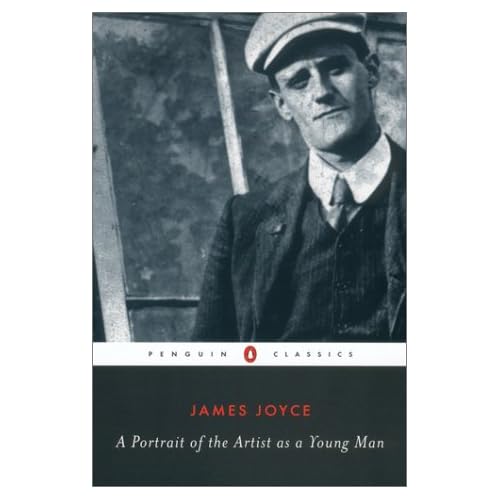
I recently listened to Duncan Watts on the HBR IdeaCast (a podcast from Harvard Business Review). An online executive summary addressing the same topic can be seen here. Watts, Sociology Prof at Columbia, claims the epidemic analogy is flawed, using the simple equation to illustrate if the infection (reproduction) rate is greater than one. While the use and application of viral has been flawed, it is unfortunate that Watts brings forth a seemingly more flawed analogy to present a novel idea to promote his research. Watts does a good job of simplifying his approach and gives part of the description of an epidemic - if growth is greater than one than the spread can be exponential; if less than one, the spread will burn out. As readers of the blog know, I see “viral” misused or misunderstood by many marketers and advertisers that want the benefits of viral campaigns, but not sure how to fuel the campaign. However, I don’t need it replaced by one equally or more flawed. For me, viral is to big seed as Catholic is to Protestant in Portrait of the Artist when Cranly asks Stephen if he intends to become a Protestant:
I said that I had lost the faith, Stephen answered, but not that I had lost self-respect. What kind of liberation would that be to forsake an absurdity which is logical and coherent and to embrace one which is illogical and incoherent?Watts looks to introduce "Big Seed” marketing – basically, viral + augmented campaign. Not a bad idea, but a bit more illogical and incoherent than viral.
I don’t disagree with Watts – yet, Big Seed is a bit flawed as well, and perhaps as overly simplified has he’s portrayed viral. From a “viral” standpoint, big seed isn’t as descriptive or easy to share (reproduce). What Watts fails to mention, at least in the interview, is a notion of time, or lifecycle for the seed or epidemic, and what percentage of a population is infected, and what the growth rate/reproduction rate of the population as a whole. Additionally, big seed doesn’t address the concept of inoculation. Given what’s missing, I think viral is a more accurate and easy to share analogy to understand the organic, potentially infectious, nature of messages, ideas, and symbolic identities.
Communication messages and campaigns can be augmented by “viral” efforts. Viral alone is not sufficient. But then again, I "have read little and understand less.”
10 May 2007
Culture Jamming
Culture Jamming & The Importance of Owning Your Identity
Through acts of cultural jamming we can see how one’s symbolic identity (and its acceptance by the public) are at risk if it is not authentic and grounded. Culture Jamming, according to Wikipedia, “is an act that transforms existing mass media to produce commentary about itself, using the original medium’s communication method.” I see it as guerilla marketing that usurps the dominant or intended message with an alternate message – which may be more succinctly described as negative-chaining. Cultural jamming disrupts the one-way channel of advertising. Sometimes this may be cute and clever without much damage, eliciting a laugh or a chuckle from an audience member. On the other hand it can be much more damaging actually devalue the symbolic currency of one’s identity through negative-chaining.
Culture jamming is another example of the new media age changing the game – not just the media channels and the speed at which those channels can deliver messages, but the ease of others to possess the tools and skills to hijack a message. This reinforces the need for your identity to be authentic and grounded. You need to walk the talk. If not your message is more susceptible to falling prey to cultural jammers. Mind you, the cultural jammers aren’t simple graffiti artists or vandals – while some may argue they are. They are cleverly coopting media and transferring ownership of the message. They are not doing it as a simple mark of physical territory like a gang member might do. And, they aren’t the Allen Funts or Ashton Kutchers of the world –they don’t want to take advantage of individuals. Instead, their targets are corporations and media channels. It is the corporation that is on Candid Camera and it is the less than diligent media that is Punk’d. Check out Joey Skaggs rules on who’s fair game to better understand this point.
While doing more research on Ji Lee’s Bubble Project, I came upon more interesting pranks and cultural jamming examples… flash mobs, Joey Skaggs, billboard liberation front etc (last year I had a post about flash mobs fizzling when advertisers tried to coopt them). You can see the absent-minded media running with a story like it’s a ham sandwich – wait ham sandwiches don’t run, but this story had legs.
In my opinion, a great example of cultural jamming comes form the Yes Men and their Dow Ethics incident - see the Bhopal and HUD sections of fake news created a real event. News outlets thought the Yes Men were Dow representatives and that Dow was going to make reparations for it’s chemical disaster in Bhopal. This in turn caused the real Dow spokes people to restate their rather unsavory position regarding the Bhopal disaster refreshed collective image of the tragedy and reminded the public image of a cold corporation.
There is an artistic/creative/novel element at play here. With all forms of communication and entertainment, artistry is needed to engage the audience. Sometimes the culture jamming artistry breathes new life into seemingly dormant dramas or it creates negative-chaining, as the seeds for a symbolic vision’s destruction are sown in it’s genesis. Once a particular story violates the here-and-now or is seen to be inauthentic, a vision is on the express path to implosion.
As I mentioned earlier, there is a guerilla nature to this kind of media expression. I see it as a flip to when advertisers try to grab onto a new media or segment only to have it backfire because the audience knows it is not authentic. Some recent examples are flogs (fake blogs) or the corporate sponsored flash mobs that failed to ignite interest. Successful culture jammers are able to disrupt the flow of information (in the least) and if done correctly can make once propagandic, one-way message awake our critical thinking and re-evaluate a product or service.
The risk for being a victim of jamming, much like the risk of running failed guerilla marketing campaigns, increases in relation to your inauthenticity and inability to ground your identity.
Now those that worship at the shrine of advertising will still argue that any buzz is good buzz. I think that ‘s only true in the gossip/tabloid/celebrity hype machine. It surely isn’t the case in politics, products, or services. Ask the Dow PR team about the buzz generated by the Yes Men.
The speed of today’s media reinforces the need to have an authentic, grounded identity.
Through acts of cultural jamming we can see how one’s symbolic identity (and its acceptance by the public) are at risk if it is not authentic and grounded. Culture Jamming, according to Wikipedia, “is an act that transforms existing mass media to produce commentary about itself, using the original medium’s communication method.” I see it as guerilla marketing that usurps the dominant or intended message with an alternate message – which may be more succinctly described as negative-chaining. Cultural jamming disrupts the one-way channel of advertising. Sometimes this may be cute and clever without much damage, eliciting a laugh or a chuckle from an audience member. On the other hand it can be much more damaging actually devalue the symbolic currency of one’s identity through negative-chaining.
Culture jamming is another example of the new media age changing the game – not just the media channels and the speed at which those channels can deliver messages, but the ease of others to possess the tools and skills to hijack a message. This reinforces the need for your identity to be authentic and grounded. You need to walk the talk. If not your message is more susceptible to falling prey to cultural jammers. Mind you, the cultural jammers aren’t simple graffiti artists or vandals – while some may argue they are. They are cleverly coopting media and transferring ownership of the message. They are not doing it as a simple mark of physical territory like a gang member might do. And, they aren’t the Allen Funts or Ashton Kutchers of the world –they don’t want to take advantage of individuals. Instead, their targets are corporations and media channels. It is the corporation that is on Candid Camera and it is the less than diligent media that is Punk’d. Check out Joey Skaggs rules on who’s fair game to better understand this point.
While doing more research on Ji Lee’s Bubble Project, I came upon more interesting pranks and cultural jamming examples… flash mobs, Joey Skaggs, billboard liberation front etc (last year I had a post about flash mobs fizzling when advertisers tried to coopt them). You can see the absent-minded media running with a story like it’s a ham sandwich – wait ham sandwiches don’t run, but this story had legs.
In my opinion, a great example of cultural jamming comes form the Yes Men and their Dow Ethics incident - see the Bhopal and HUD sections of fake news created a real event. News outlets thought the Yes Men were Dow representatives and that Dow was going to make reparations for it’s chemical disaster in Bhopal. This in turn caused the real Dow spokes people to restate their rather unsavory position regarding the Bhopal disaster refreshed collective image of the tragedy and reminded the public image of a cold corporation.
There is an artistic/creative/novel element at play here. With all forms of communication and entertainment, artistry is needed to engage the audience. Sometimes the culture jamming artistry breathes new life into seemingly dormant dramas or it creates negative-chaining, as the seeds for a symbolic vision’s destruction are sown in it’s genesis. Once a particular story violates the here-and-now or is seen to be inauthentic, a vision is on the express path to implosion.
As I mentioned earlier, there is a guerilla nature to this kind of media expression. I see it as a flip to when advertisers try to grab onto a new media or segment only to have it backfire because the audience knows it is not authentic. Some recent examples are flogs (fake blogs) or the corporate sponsored flash mobs that failed to ignite interest. Successful culture jammers are able to disrupt the flow of information (in the least) and if done correctly can make once propagandic, one-way message awake our critical thinking and re-evaluate a product or service.
The risk for being a victim of jamming, much like the risk of running failed guerilla marketing campaigns, increases in relation to your inauthenticity and inability to ground your identity.
Now those that worship at the shrine of advertising will still argue that any buzz is good buzz. I think that ‘s only true in the gossip/tabloid/celebrity hype machine. It surely isn’t the case in politics, products, or services. Ask the Dow PR team about the buzz generated by the Yes Men.
The speed of today’s media reinforces the need to have an authentic, grounded identity.
17 April 2007
Me, I'm a thinker

Thanks to Snarky Squab. She has tagged me as a thinker... or at least a thinking blogger. See the shiny, new image at the top of this post. Ah, very nice. Yes, I know. Pehaps Ben & Jerry will ask me to star in a new ice cream flavor. Dare to dream, my friend. Dare to dream.
Thanks to Squab for the shout out. In kind, she has made me think. Other blogs and bloggers may consider themselves tagged if they choose to. Some of the ones that make me think are:
- 37 Signals - I love their blog, their insight, and their software.
- Seth Godin
- Craig at LOHAD
- Bloggermann
- The World's Finest News Source
- Dr. John Cragan - no blog, you have go old skool and read books, or have a beer with him -- and it's worth it.
14 March 2007
Head Like A Hole: NIN's new SEO/Viral Campaign
Thanks to Field Agent Jason for this very interesting promotion from Nine Inch Nails. The campaign is a bit esoteric…or a whole lotta of esoteric. Read the Rolling Stone article and then look at some of the comments from music and marketing folks. What I like about the promotion is that it seems to combine an element of gaming and like good web applications or sites, it makes the user feel like they are making progress. In the end commitment is escalated to such a point that one will have to buy (or illegally rip) the album. Additionally, it seems to be "brand-right" in that the campaign is not all things to all people, but rather does a lot to shield the committed and bring in a certain segment.
Cool and weird.
Cool and weird.
Subscribe to:
Posts (Atom)