Showing posts with label Interesting Read. Show all posts
Showing posts with label Interesting Read. Show all posts
21 April 2013
Functional Stupidity...or why DERP works
CNN Money recently published a post regarding "the benefits of being stupid at work." The article highlights the work of Alvesson and Spicer (Journal of Management Studies, November 2012) as they introduce a "Stupidity-Based Theory of Organizations." The researchers put forward the idea of "functional stupidity" in the organization. Looking at their argument through the lenses of cultural communication, power, identity, and structuration, we can easily see why we have functionally stupid organizations. Within those, functionally stupid individuals tend to do well and are promoted. In other words DERP!
16 September 2009
Things are always better when they're fun
A friend and former colleague on the three important aspects of a "delightful user experience":
- Playfulness
- Usability
- Context
As always, nice job Fred.
- Playfulness
- Usability
- Context
As always, nice job Fred.
07 September 2009
Benjamin Zander's TED Talk
In 2008, through my work with Best Buy, I was introduced to Benjamin Zander. His TED talk and his book The Art of Possibility are well worth your time, IMHO. If you're ever stuck or caught up in the existing rules, remember that it's all invented...and you have a rich array of possibilities in front of you.
20 January 2009
03 January 2009
Business/Technology Break Through from 2008
Looking back, Apple was able to keep their hot streak alive. In '07 they changed the smartphone landscape with the introduction of the iPhone. In '08, they released a new iPhone, but more importantly they opened up the ability to deliver applications created by other programmers. The model is the same as their iTunes store. More details are in this Washington Post article.
Beyond the money Apple is making (30%) from each transaction, it turns out that this may be more of strategic move, rather than a short-term money-maker in a down economy. Here's what I found to be the most interesting paragraph in the entire article:
Best wishes for a safe, happy, and prosperous 2009.
Beyond the money Apple is making (30%) from each transaction, it turns out that this may be more of strategic move, rather than a short-term money-maker in a down economy. Here's what I found to be the most interesting paragraph in the entire article:
Apple won't say how much money the App Store is taking in, nor will it say how many of the 300 million downloads were free apps and how many cost money (most apps are free; the others cost anywhere from a buck to $10). Apple gets a 30 percent cut of revenue generated by apps. But for Apple right now the money isn't the point. The big thing is the race to become the dominant mobile-computing platform, the way IBM-standard PCs running Microsoft operating software -- first DOS and then Windows -- came to dominate personal computing in the 1980s and early 1990s.
Best wishes for a safe, happy, and prosperous 2009.
03 December 2008
If they were smart...
Great post on Church of the Customer regarding CEOs travelling to DC with their hands-out for a handout.
If they were very smart, the CEOs would drive unreleased, next-generation
cars that get 100 MPG. They'd stop in a half-dozen towns along the way and
invite a newspaper editorial board writer to ride shotgun for a dozen miles.
They'd update their status on Twitter. They'd write a few posts for the company
blog. They'd shoot video on a Flip camera and talk about how they screwed up at
their first appearance, how they're selling their
fleet of corporate jets, and their plans for the future. If they behave like
real people instead of CEO machines, they might arrive in D.C. backed by some
pretty good word of mouth.
28 November 2008
Outliers
I hope that everyone is recovering nicely from Thanksgiving. It was a relaxing and fun day for us in Minneapolis. We did not travel as we are preparing HQ for another junior agent.
I finished Gladwell’s Outliers last night. It was a great read. Using the term Outlier in it’s scientific and statistical sense, Gladwell describes stories of successful individuals, but moves beyond the Algers-esque stories of a strong individual. He looks at the socio-economic, cultural, and historic elements that also contribute to working for or against one’s success. Here's Gladwell talking about why he wrote the book:
I was surprised Gladwell did not explicitly acknowledge or reference Anthony Giddens’ theory of sturcturation. In a similar vein, I was surprised that Tipping Point did not acknowledge Rogers’ work on Diffusions of Innovation…while I’m at it, why Bourdieu’s work was not surfaced in the cultural discussions. Those nits aside, I really enjoyed the book and thought it is a great way to help us think more critically about the socio-symbolic construction of reality.
Some of the more interesting stories for me were those of Bill Gates early high school opportunities; Bill Joy’s college experience (some similar elements to that of Gates’ high school experience – both had, at the time, rare opportunities to program on time share clients); the Beatles early days in Hamburg, and the socio-cultural elements of Columbian and Korean co- pilots that make it difficult for them to raise questions or provide a change of course in times of emergency. Yet the most interesting for me may have been the discussion of the KIPP (knowledge is power program) in the New York City school system.
I recommend the book.
Takeaways: Culture and history continue to provide “here-and-now” phenomena that shape our symbolic reality; and the boot straps story is really kind of hogwash (sorry Ayn Rand).
I finished Gladwell’s Outliers last night. It was a great read. Using the term Outlier in it’s scientific and statistical sense, Gladwell describes stories of successful individuals, but moves beyond the Algers-esque stories of a strong individual. He looks at the socio-economic, cultural, and historic elements that also contribute to working for or against one’s success. Here's Gladwell talking about why he wrote the book:
In the case of Outliers, the book grew out a frustration I found myself having with the way we explain the careers of really successful people. You know how you hear someone say of Bill Gates or some rock star or some other outlier—"they're really smart," or "they're really ambitious?' Well, I know lots of people who are really smart and really ambitious, and they aren't worth 60 billion dollars. It struck me that our understanding of success was really crude—and there was an opportunity to dig down and come up with a better set of explanations.
I was surprised Gladwell did not explicitly acknowledge or reference Anthony Giddens’ theory of sturcturation. In a similar vein, I was surprised that Tipping Point did not acknowledge Rogers’ work on Diffusions of Innovation…while I’m at it, why Bourdieu’s work was not surfaced in the cultural discussions. Those nits aside, I really enjoyed the book and thought it is a great way to help us think more critically about the socio-symbolic construction of reality.
Some of the more interesting stories for me were those of Bill Gates early high school opportunities; Bill Joy’s college experience (some similar elements to that of Gates’ high school experience – both had, at the time, rare opportunities to program on time share clients); the Beatles early days in Hamburg, and the socio-cultural elements of Columbian and Korean co- pilots that make it difficult for them to raise questions or provide a change of course in times of emergency. Yet the most interesting for me may have been the discussion of the KIPP (knowledge is power program) in the New York City school system.
I recommend the book.
Takeaways: Culture and history continue to provide “here-and-now” phenomena that shape our symbolic reality; and the boot straps story is really kind of hogwash (sorry Ayn Rand).
03 July 2008
New Field Link: eMarketer Daily
Greetings. I hope everyone has a safe and happy holiday weekend.
I wanted to call out a new Field Link. It's the HTML version of eMarketer's daily email. I've received the email update for quite some time and find it an invaluable and thought provoking resource.
I wanted to call out a new Field Link. It's the HTML version of eMarketer's daily email. I've received the email update for quite some time and find it an invaluable and thought provoking resource.
24 June 2008
Brand Lessons with The Big K

Rockford, IL, my hometown is the source for some new store testing by K-Mart... or more accurately new testing in old stores. This effort is interestingly detailed in a recent Chicago Tribune article. You may know Rockford as the former screw capital of the world, not because of Ginger Lynn Allen, but because of its status a leading manufacturing town from the 1940s – 1970s. Towards the end of Rockford’s glory days came K-Mart. K-Mart is trying to figure out its brand identity and how to ground it in a meaningful way with constituents. In a similar way, Rockford struggles to attract new business and industries to the once proud city.
I think there are a few interesting take-aways from the article:
1. As mentioned with politics in the previous post, when it comes to brand identity, it’s a position or be positioned proposition. K-Mart had the lead from a timing perspective and Wal-Mart outflanked K-Mart pragmatically on price. Target claimed a social position based on shopping experience. That kind of leaves a righteous position, but it’s hard for any consumer to think blue light and quality together.
2. Test. I think it’s a great idea to test concepts. In this case it’s a low-risk proposition, as Rockford is not a trend-setting, high visibility hot spot. Yes, I know, the greatest power pop band ever came out of Rockford, but that’s not going to help K-Mart. So, K-Mart may want us to want them, we’re not going to surrender to their whims. Ok, back to my point about testing. Try to figure out what might work. Iterate. Rinse, lather, repeat. Progress, not perfection. Then when you’re feeling confident, notify the public. Not the other way around. Especially if you’re trying to re-brand or reposition, don’t lead with the awareness campaign, then try to figure it out. You can do more brand damage if you deliver a bad experience when you’re saying you’re new and improved. The customer is left to believe that you’ve gone from bad to worse.
3. All symbolic, or brand, identities have a shelf life. Perhaps the Big K has run its course. From it’s regional days to the high points in the 70s, K-Mart has clearly gone through consciousness creation (new, unique drama), consciousness raising (growing/expanding the identity among more people), sustain the vision (shielding the committed, staving off new visions like Wal-Mart or Target), decline (your identity loses currency in the market place and your customers seek new visions that meet their needs) and then implosion (the vision dies).
20 May 2008
Zappos & Culture: Walking the Talk with an Online Shoe Store
Great article about Zappos and their policy to pay employees to quit.
Hat tip to Christopher for the link.
It’s a small practice with big implications: Companies don’t engage emotionally with their customers—people do. If you want to create a memorable company, you have to fill your company with memorable people. How are you making sure that you’re filling your organization with the right people? And how much are you willing to pay to find out?
Hat tip to Christopher for the link.
28 April 2008
Knowledge Management & Innovation: The Knowledge Brokering Cycle
One of my professional interests is knowledge management. From base level items that may technically be information management (in the areas of customer service -- pushing the right information closer to the customer) to the concepts of a knowing organization and strategically leveraging knowledge to develop innovative products and services. While preparing for a project to address innovation within health care, I was reading HBR's book on Innovation. One of the chapters, by Hargadon & Sutton ("Building an Innovation Factory") is an interesting overview of the process of knowledge brokering (rooted in the work of Thomas Edison). The authors highlight a four-part process for knowledge brokering, which is a great pragmatic approach to starting to try and repeat a process, rather than saying "then the magic happens...and we're really not sure how."
The Knowledge Brokering Cycle:
1. Capture Good Ideas
2. Keep Ideas Alive
3. Imagining New Uses for Old Ideas
4. Putting Promising Concepts to the Test
Within these steps, some other knowledge management basics are touched upon such as: (1) if you want more ideas, get smart and creative people to interact -- give them the space, technology and resources to do so; (2) leverage the concept of parallax -- look at items from multiple perspectives, industries, products and services; and (3) try to cultivate (and save) good organizational knowledge -- don't let your good ideas leave the company when a particular person leaves the company (unless directed by a judge).
The downer when reading these things or working on other knowledge projects is that I'm reminded of a "Ground Hog Day" / Sisyphus (not surprisingly, Murray is more accessible than Camus) nature of a lot of our problem solving works. It seems like we're continuing to work on the same problems. Elements change, but at times it seems like the same rock and the same mountain. However, as an old boss said, he'd rather we use our brains for thinking rather than remembering. If we can increase the organizational remembering, maybe we can think through more innovations.
The Knowledge Brokering Cycle:
1. Capture Good Ideas
2. Keep Ideas Alive
3. Imagining New Uses for Old Ideas
4. Putting Promising Concepts to the Test
Within these steps, some other knowledge management basics are touched upon such as: (1) if you want more ideas, get smart and creative people to interact -- give them the space, technology and resources to do so; (2) leverage the concept of parallax -- look at items from multiple perspectives, industries, products and services; and (3) try to cultivate (and save) good organizational knowledge -- don't let your good ideas leave the company when a particular person leaves the company (unless directed by a judge).
The downer when reading these things or working on other knowledge projects is that I'm reminded of a "Ground Hog Day" / Sisyphus (not surprisingly, Murray is more accessible than Camus) nature of a lot of our problem solving works. It seems like we're continuing to work on the same problems. Elements change, but at times it seems like the same rock and the same mountain. However, as an old boss said, he'd rather we use our brains for thinking rather than remembering. If we can increase the organizational remembering, maybe we can think through more innovations.
24 March 2008
TED - Ideas Worth Spreading
I was recently turned onto TED by a coworker. TED stands for technology, entertainment, design. There's a lot of good, in depth content. In this nerd's opinion, Wow! What a great site. As a sampling, here's a video of Larry Lessig (Stanford prof and digital copyright authority). "TEDTalks" are also available via podcasts.
22 January 2008
Meta Tipping Point: The Tipping Point of "The Tipping Point"
Interesting article in Fast Company regarding The Tipping Point and influentials.
24 September 2007
Hotel Chevalier
 Honorary field agent Colin sent me a very interesting article about Wes Anderson’s new films. Yes, plural. Anderson, the director of some of my favorite movies including Bottle Rocket and The Royal Tennenbaums, is releasing The Darjeeling Limited in theatres and its 13-minute prequel, Hotel Chevalier, on iTunes later this week. The article does a fine job of explaining both films and their interdependencies, so I won’t give a synopsis here. In the name of balance, earlier industry reports said that the short was included in the festival release, but will not be part of the mainstream release.
I’m interested on multiple levels. First, as a fan of film in general Anderson specifically, I’m intrigued and would like to see it. I’m fairly certain that it won’t be some Guns & Roses Use Your Illusion I & II garbage, that was thrust at fans to make money and fulfill some contractual obligation. Two of crap is still crap – you could have boiled it down to one decent album, but instead…oh I digress. No, I believe Chevalier / Darjeeling will be another example of director as auteur... wait let me put out my Gallois and take off the black turtleneck. There much better. We can see more of Anderson’s vision which helps fans further appreciate what’s been done and what’s yet to come.
Secondly, as someone interested in new media and advertising, I find this as a novel way to bring online and offline together in a constructive way. From a brand perspective, Anderson never tries to be all things to all people. If so, he might be signing up Dwayne “The Rock” Johnson in Game Plan II: Cinnamon’s Revenge. While Anderson’s approach with the internet short might not be appealing to everyone, it should play to the base and could help expand to new fans interested in the buzz or compelled by the 13-minute story.
Finally, I’m interested in witnessing the continued progression online/new media is making as it knocks off the kings of the mass media hill. Newspapers who missed the net train are dying on the vine. Radio and the music industry are still trying to make sense of easy to access, on demand, digital music. Television becomes more fragmented and continues to lose viewers, especially among echo boomers. Now, movies are seeing their business change through technology – slowly through video, then DVD and now the Internet. I believe that the movie industry has been able to leverage the online channel in a positive way through the availability of trailers, intriguing promotional sites, and some great viral/guerilla campaigns. Done, right “old” and new media can work together to deliver an excellent customer experience.
Best of luck to Wes and his crew.
15 May 2007
Big Seed?
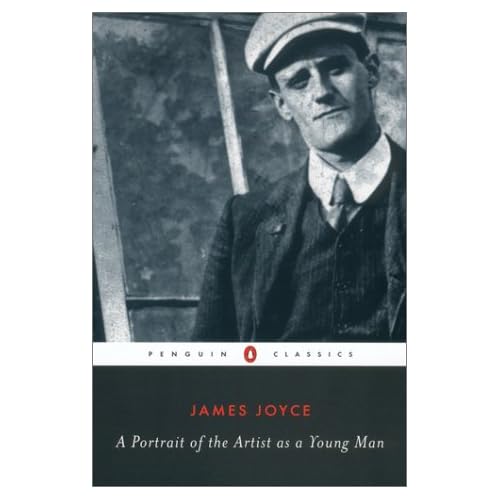
I recently listened to Duncan Watts on the HBR IdeaCast (a podcast from Harvard Business Review). An online executive summary addressing the same topic can be seen here. Watts, Sociology Prof at Columbia, claims the epidemic analogy is flawed, using the simple equation to illustrate if the infection (reproduction) rate is greater than one. While the use and application of viral has been flawed, it is unfortunate that Watts brings forth a seemingly more flawed analogy to present a novel idea to promote his research. Watts does a good job of simplifying his approach and gives part of the description of an epidemic - if growth is greater than one than the spread can be exponential; if less than one, the spread will burn out. As readers of the blog know, I see “viral” misused or misunderstood by many marketers and advertisers that want the benefits of viral campaigns, but not sure how to fuel the campaign. However, I don’t need it replaced by one equally or more flawed. For me, viral is to big seed as Catholic is to Protestant in Portrait of the Artist when Cranly asks Stephen if he intends to become a Protestant:
I said that I had lost the faith, Stephen answered, but not that I had lost self-respect. What kind of liberation would that be to forsake an absurdity which is logical and coherent and to embrace one which is illogical and incoherent?Watts looks to introduce "Big Seed” marketing – basically, viral + augmented campaign. Not a bad idea, but a bit more illogical and incoherent than viral.
I don’t disagree with Watts – yet, Big Seed is a bit flawed as well, and perhaps as overly simplified has he’s portrayed viral. From a “viral” standpoint, big seed isn’t as descriptive or easy to share (reproduce). What Watts fails to mention, at least in the interview, is a notion of time, or lifecycle for the seed or epidemic, and what percentage of a population is infected, and what the growth rate/reproduction rate of the population as a whole. Additionally, big seed doesn’t address the concept of inoculation. Given what’s missing, I think viral is a more accurate and easy to share analogy to understand the organic, potentially infectious, nature of messages, ideas, and symbolic identities.
Communication messages and campaigns can be augmented by “viral” efforts. Viral alone is not sufficient. But then again, I "have read little and understand less.”
02 May 2007
Novelty & Redundancy in Messaging
 As readers of the blog have noticed, this is primarily an apolitical blog. I’m linking to an article in the Utne Reader by Joseph Hart. I realize linking to an Utne article may give you some insight into my political preference. The article provides interesting insight into the problems of modern protest. From a communication or messaging perspective, there are two points of interest here:
1. Novelty vs. Redundancy, and
2. Grounding a message in the “here and now phenomenon”
Novelty vs. Redundancy
Effective, engaging communication balances novelty (something new or creative) with redundancy (something known or familiar). Communication has the power to engage, organize and reduce entropy and chaos. Novelty keeps a message, idea, symbol system fresh, vibrant and relevant. However, if it is too novel it will go over the heads of the desired audience segment and not chain-out. If it is too redundant, it is stale, old, and boring.
Not everyone has the same baseline or tastes, so the balance is not a simple recipe, but we know that you need to keep both in mind and in balance. In the case of protest movements, the creative/novel forms of civil disobedience from Henry David Thoreau, to Gahndi, to the anti-War movement in the 1960s, there was a level of novelty, rooted in the redundant (civil disobedience). It seems that most protests, that of the signs and badly rhyming counting chants (one, two, three, four, we can’t remember what we’re here for…five, six, seven, eight, no one really wants to participate) variety have been in arrested development for over forty years.
Hart points to new, creative/novel, ways in which protest messages may be shared in hopes of not being turned off or tuned out. One example is Ji Lee’s Bubble Project. According to Hart:
One example of a successful anticorporate campaign is the Bubble Project launched in 2002 when Ji Lee, a thirtysomething New York ad man fed up with his trade, printed thousands of stickers shaped like blank cartoon bubbles and then slapped them on posters and billboards around the city -- an open invitation for passers-by to fill in the blank.
The results, documented in Lee's book Talk Back (Mark Batty, 2006), were hilarious, subversive, and encouraged participation. Now there are bubble commentaries around the world, ranging from the political (a grinning model on
an insurance company billboard asks, "Why doesn't the government insure our health?") to the absurd (the Starbucks mermaid asks, "Have you seen my nipples?"). Although he has been fined a few times for vandalism, Lee isn't a revolutionary -- he's simply trying to "transform the corporate monologue into a public dialogue," he says.
In the case of protests and civil disobedience, the form of sign and chant, usually by hippies is not novel, it is not grounded in the here-and-now. Dirty hippies are not nearly as attractive in post free-love, electric Kool-Aid acid test kind of world. We can tune out many protests simply based on their form and medium. Changing the medium to a more modern venue is one way to help keep a message grounded. I would say it is necessary, but not sufficient.
In essence, protests need to embrace the core, genesis ideas (such as change through civil disobedience), while at the same time keeping the messages fresh and relevant in today’s society. These concepts of novelty, redundancy, and grounding are law-like principles in communication. It would serve a communication strategist or branding professional well to understand these concepts.
17 April 2007
Halos, strategy, and uncertainty
In a recent edition of McKinsey Quarterly (registration required), Phil Rosenzweig discusses the “Halo Effect” and other business delusions. The article is adapted from his book the Halo Effect: . . . and the Eight Other Business Delusions That Deceive Managers. Rosenzweig, a professor of strategy and international management, adjustis the halo effect from psychology to business. The basic argument, one trait or perception influences the rest. In this case if business or industry is going well, many believe that a company or leader has a sound strategy. Conversely when trends or companies are performing poorly, one may say it is poor strategy, etc. Case in point, Enron. When they were redefining business they were genius -- the media and Tom Peters couldn’t praise them enough. Now, they are seen as villains and are the subject of “business ethics” case studies.
Dr. Phil (I had to, c’mon), says that business managers are often deceived by business books that propose simple solutions. The problem is that we live in a complex and chaotic world. So the halo is "hey look at how good this is, we should implement here." Rosenzweig seems irritated by the lack of critical thinking skills by business managers (can I get an Amen?)
Getting past the irony of one business book saying that other business books are wrong and I have the right answer, I enjoyed Rosenzweig’s Zen-like insight on uncertainty. Like the first rule of Zen -- all life is sorrowful (but sorrow can be transcended) -- in business, we are continually faced with uncertainty and it is the role of the strategist to make the best decisions for the organization in the face of that uncertainty. While people want and need the world to make sense an move in an orderly fashion, it doesn’t. All systems tend towards chaos.
Chaos inducing uncertainty arises from many sources in the business-world including (1) the business world itself, (2) customer choice and adoption of new goods or services, and (3) technological change -- new technologies disrupt business all the time.
Given all of this, Rosenzweig concludes:
Dr. Phil (I had to, c’mon), says that business managers are often deceived by business books that propose simple solutions. The problem is that we live in a complex and chaotic world. So the halo is "hey look at how good this is, we should implement here." Rosenzweig seems irritated by the lack of critical thinking skills by business managers (can I get an Amen?)
Getting past the irony of one business book saying that other business books are wrong and I have the right answer, I enjoyed Rosenzweig’s Zen-like insight on uncertainty. Like the first rule of Zen -- all life is sorrowful (but sorrow can be transcended) -- in business, we are continually faced with uncertainty and it is the role of the strategist to make the best decisions for the organization in the face of that uncertainty. While people want and need the world to make sense an move in an orderly fashion, it doesn’t. All systems tend towards chaos.
Chaos inducing uncertainty arises from many sources in the business-world including (1) the business world itself, (2) customer choice and adoption of new goods or services, and (3) technological change -- new technologies disrupt business all the time.
Given all of this, Rosenzweig concludes:
The task of strategic leadership is therefore not to follow a given formula or set of steps. Instead it is to gather appropriate information, evaluate it thoughtfully, and make choices that provide the best chance for the company to succeed, all the while recognizing the fundamental nature of business uncertainty. Paradoxically, a sober understanding of this risk—along with an appreciation of the relative nature of performance and the general tendency for performance to regress—may offer the best basis for guiding effective decisions. These complex decisions, made without any guarantee of success, are ultimately the main contribution of business strategists. If a set of steps that could guarantee success did exist, and if greatness were indeed simply a matter of will, then the value of clear thinking in business would be lower, not greater.
27 March 2007
Polarize Me

In the latest issue of Fast Company, (subscription required) Dan & Chip Heath, authors of Made to Stick, state “if you want people to like you, first decide who needs to hate you.”
As I’ve pointed out on this blog, you can’t be all things to all people if your brand is going to be meaningful and equitable. You need to be unique (differentiated), you need to ground that identity, and it must be profitable.
The Bros. Heath demonstrate through tea, vodka, and personal ads how one may differentiate or may just be a part of the “hey – I’m here too” group.
05 December 2006
Wii're #3!!

Surowiecki (The Wisdom of Crowds) has an interesting article in a recent issue of The New Yorker. It is about Nintendo and their profitable position in the home gaming market. They're not trying to be all things to all people, like MS with Xbox360 or Sony with PS3. They focus on games and are able to acutally make money on their consoles. After reading Surowiecki's article, check out the Fast Company research on all that Sony has at stake when it comes to the PS3 and the PS3 economy.
I have to admit that I'm a sucker for the PS3 campaign, especially the thirty second spot with the baby doll that comes to life as it controls and is controlled by the PS3. A very post-modern (dare we say high modern) ode to structuration and a great awareness campaign.
Thanks to Pam for the article.
Subscribe to:
Posts (Atom)