93 X, a Minneapolis-based hard rock station, has released a new commercial recently. The station is geared towards a predominately male demographic, so the use of attractive women in their commercial is understandable. What’s not is the way they use the women in the promotion. Beyond a woman as object critique, I’m surprised at the bizarre nature of the commercial. The women lip synch to songs that one might hear on the “X”, but they also lip synch the voices of the male talent – you know the crazy zoo crew team that helps you ROCK!! The clichéd lipstick lesbian/bi-curious, girl-on-girl titillation is then usurped by crazy tran-zaniness. There’s a new zoo crew in town and s/he means business. Austin Powers might watch the commercial and say “that’s a man, baby!” Is that what the X is looking for in their audience? Transgendered women ages 18 – 34?
I know, I know. The middle school mentality ad agency is saying “hey man, we’re generating buzz.” Fine, you have your buzz, but do you have higher ratings in a more attractive demographic?
16 October 2007
09 October 2007
Buzzes like a fridge
As I anxiously await my download of "In Rainbows", I'm reading reactions to Radiohead's approach to album sales. On Green Plastic, we learn other bands are going to allow more free music. Note the jumps in Radiohead searches in the post. I still thought we'd hear more about the free and preview items Wilco has done in advance of their past few albums. Bob Mould has some interesting thoughts about this topic on his blog.
UPDATE - 10/16/07
Looks like Radiohead has sold over 1.2 million copies of the album through digital download alone and made $8-$10 Million alread on the record...and those figures don't include the sales for the deluxe box set available later this year. More here.
UPDATE - 10/16/07
Looks like Radiohead has sold over 1.2 million copies of the album through digital download alone and made $8-$10 Million alread on the record...and those figures don't include the sales for the deluxe box set available later this year. More here.
01 October 2007
How much would you pay for Radiohead’s new album?

Radiohead’s new album will be available for download. The announcement for the much anticipated album comes less than two weeks prior to its release. In what seems to be a twist on Wilco’s recent run of making singles and albums available digitally, via their site, before the physical release of the album. Here’s the Radiohead twist, you set the price! Yes, you set the price. You pay an additional .45 Pounds for the download cost – beyond that you set the price.
Here’s another example of the Web changing traditional commerce models and a great example of strengthening one’s brand. I hypothesizing, but believe that most (or enough to make if viable) Radiohead fans will pay a reasonable rate to make it worth it to the band (who is releasing this without a major label). And what if they only cover the costs of the download? Who cares?! The real money for bands is through touring. They don’t tour to support an album, they release and album to support a tour. Also, this novel way of approaching an album release and pricing will generate enough buzz to continue to expand and sell the Radiohead catalog. Even the old label wins here.
A few takeaways: (1) Leverage new media in meaningful ways, just don’t repeat the constrained old media in a new channel, you'll just screw up faster. (2) Remain authentic (see #1). (3) Continue to engage and leverage your base community and allow room
Thanks to Kyle for the article.
24 September 2007
Hotel Chevalier
 Honorary field agent Colin sent me a very interesting article about Wes Anderson’s new films. Yes, plural. Anderson, the director of some of my favorite movies including Bottle Rocket and The Royal Tennenbaums, is releasing The Darjeeling Limited in theatres and its 13-minute prequel, Hotel Chevalier, on iTunes later this week. The article does a fine job of explaining both films and their interdependencies, so I won’t give a synopsis here. In the name of balance, earlier industry reports said that the short was included in the festival release, but will not be part of the mainstream release.
I’m interested on multiple levels. First, as a fan of film in general Anderson specifically, I’m intrigued and would like to see it. I’m fairly certain that it won’t be some Guns & Roses Use Your Illusion I & II garbage, that was thrust at fans to make money and fulfill some contractual obligation. Two of crap is still crap – you could have boiled it down to one decent album, but instead…oh I digress. No, I believe Chevalier / Darjeeling will be another example of director as auteur... wait let me put out my Gallois and take off the black turtleneck. There much better. We can see more of Anderson’s vision which helps fans further appreciate what’s been done and what’s yet to come.
Secondly, as someone interested in new media and advertising, I find this as a novel way to bring online and offline together in a constructive way. From a brand perspective, Anderson never tries to be all things to all people. If so, he might be signing up Dwayne “The Rock” Johnson in Game Plan II: Cinnamon’s Revenge. While Anderson’s approach with the internet short might not be appealing to everyone, it should play to the base and could help expand to new fans interested in the buzz or compelled by the 13-minute story.
Finally, I’m interested in witnessing the continued progression online/new media is making as it knocks off the kings of the mass media hill. Newspapers who missed the net train are dying on the vine. Radio and the music industry are still trying to make sense of easy to access, on demand, digital music. Television becomes more fragmented and continues to lose viewers, especially among echo boomers. Now, movies are seeing their business change through technology – slowly through video, then DVD and now the Internet. I believe that the movie industry has been able to leverage the online channel in a positive way through the availability of trailers, intriguing promotional sites, and some great viral/guerilla campaigns. Done, right “old” and new media can work together to deliver an excellent customer experience.
Best of luck to Wes and his crew.
19 September 2007
User Experience: Peter Merholz
Last week I was at a MIMA salon regarding user experience. The featured speaker was Peter Merholz from Adaptive Path. The subject of his talk was “Designing for an Uncertain World.” Outside of the technical difficulties with his Mac crashing (and they say Macs don’t get sick), it was a great presentation. The big ideas from his talk have implications for user experience, brand, and symbolic identity. Peter says the experience is the product. I agree. I feel that the desired experience for your customer should serve as an organizing hub. Mixing my metaphors, that organizing hub becomes the compass or star to guide you in times of uncertainty. It helps you understand, communicate and ground your symbolic identity. It helps you remember who you are, as an organization, and can prevent you from getting caught up in a features/functions commodity game. This applies to the customer experience across all channels and media. Your customer rarely makes a purchase decision in one channel – make sure your channels positively reinforce each other providing for a smooth customer experience.
While this won’t do the talk justice, here are some other take-aways from Peter’s presentation:
* Work from the user experience in (experience, features, data), rather than data out. What is the experience you want your customer to have? From there work backwards to see what it will take to make that happen.
* Big experience breakthroughs come from working on problems others consider solved. Some examples provided where one-button cameras, MP3/iPods showing the possibilities of mobile music, and TiVo showing us what is possible when it comes to recording television programming.
* The concept of working on problems others consider solved was utilized by Steve Jobs when describing the Mac in the early to mid ‘80s.\
* Don’t be all things to all people. That’s a recurring theme on this blog and I’m glad to see it applied to areas other than brand identity.
Unfortunately, the presentation is not online yet. It should be on the MIMA site in the near future. Other MIMA stuff of note, Jason Fried of 37 Signals will be a keynote speaker at the October Sumit.
05 September 2007
The quality of the answer lies in the quality of the question
Covey may tell usto start with the end in mind. Drucker begged us to ask the question “what do we hope to accomplish?” John F. Finneran in an article on Gantthead.com reminds us to start with the question. When it comes to building business cases, it’s important to understand how we may create or generate value. It starts with asking the right question.
You can read the article in its entirety here.
“Clever tools don’t mean good answers. Albert Einstein never used anything more complicated than a blackboard and the theorist of relativity also felt, “The formulation of a problem is often more essential than its solution.” And what is the simplest and the best way to kick-start formulating any problem, including a business case? A question.”
You can read the article in its entirety here.
28 August 2007
Online/Offline & Quality Leads
Offline ads are helping drive online behavior. A recent study from Jupiter and iProspect highlight the positive, symbiotic relationship between online and offline channels, as well as maximizing and optimizing search.
"Search is no longer an add-on consideration for marketers," said Murray. "It is front and center. And while it is a powerful channel on its own, it's clear that its efficacy is multiplied when combined with offline channels."
25 June 2007
Be Authentic
Greetings. It’s been a while since the last “Notes from the Field” post. No excuses worth posting – just wanted to acknowledge the fact.
Earlier in the month I was at a First Tuesday luncheon at the Carlson School. Lynn Casey, CEO of PSB, was the speaker. In the name of disclosure, I'm also working with some PSB employees on a web redevelopment effort for a client. Lynn spoke about how internet-enabled technology is (re-)defining PR. It was a good talk. I’m paraphrasing here, but the speed of the Internet is further forcing authenticity -- if one is going to ground and maintain a unique symbolic identity, they have to be authentic. The Internet, and consumer generated content, are Toto (the dog, not the band) to the digital image curtain.
A couple of take-aways:
1) Gen Xrs & Echo Boomers are now spending more time on the internet than watching TV. Does your marketing spend and/or understanding of media match this?
2) Be authentic if you want to protect your brand/symbolic ID.
Earlier in the month I was at a First Tuesday luncheon at the Carlson School. Lynn Casey, CEO of PSB, was the speaker. In the name of disclosure, I'm also working with some PSB employees on a web redevelopment effort for a client. Lynn spoke about how internet-enabled technology is (re-)defining PR. It was a good talk. I’m paraphrasing here, but the speed of the Internet is further forcing authenticity -- if one is going to ground and maintain a unique symbolic identity, they have to be authentic. The Internet, and consumer generated content, are Toto (the dog, not the band) to the digital image curtain.
A couple of take-aways:
1) Gen Xrs & Echo Boomers are now spending more time on the internet than watching TV. Does your marketing spend and/or understanding of media match this?
2) Be authentic if you want to protect your brand/symbolic ID.
04 June 2007
New York Economics
New York magazine has an interesting piece on economics of NYC. Want to know the basic business model for a pizza joint, the MOMA, a sex shop or the Yankees. You can find out here.
(via 37 Signals & Kottke)
(via 37 Signals & Kottke)
Subway Dissonance
Over the past few weeks, I’ve noticed some strange advertising choices for Subway. Subway over the past few years, primarily through Jared, have worked to differentiate themselves as a healthy alternative to traditional fast food. Beyond the sandwich having less fat (their qualified claim when there’s no cheese, oil, or mayo on your sub) than a Big Mac, Subway is now promoting ways to have a healthier meal – complimenting your sandwich with fruit and milk, rather than chips and soda. This makes sense to me. However, during the same television program I saw two Subway spots. The first one had Jared talking to little leaguers about Subways smart choice meals or fresh fit, or something like that – basically, “hey kids, don’t get fat, eat smart.” Less than twenty minutes later, Subway has another add that promotes a ginormous sandwich – so big they’re not sure how you’ll eat it. One is a steak and cheese sandwich – lots and lots of gooey, fat-laden cheese. This spot seems to say "you've given up on eating health, you’re happier when you’re full – chow down Sumo Sam!” The messaging creates a disconnect, even if the spots are hours apart, but minutes apart creates a fair amount of dissonance. So, I wonder what does Subway stand for? Their positioning doesn’t seem to ring true. Not only was a ball dropped on the creation of competing identities, another one was dropped by those doing the media buys and placement.
15 May 2007
Big Seed?
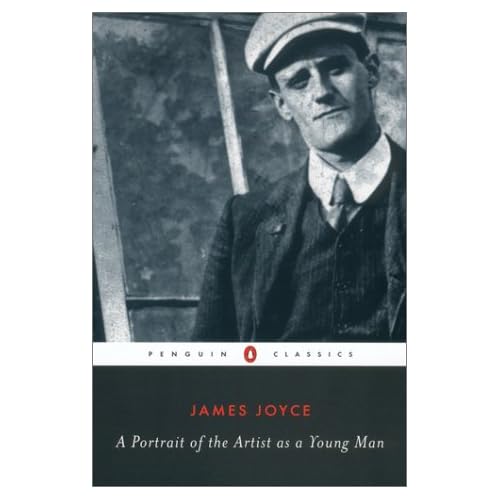
I recently listened to Duncan Watts on the HBR IdeaCast (a podcast from Harvard Business Review). An online executive summary addressing the same topic can be seen here. Watts, Sociology Prof at Columbia, claims the epidemic analogy is flawed, using the simple equation to illustrate if the infection (reproduction) rate is greater than one. While the use and application of viral has been flawed, it is unfortunate that Watts brings forth a seemingly more flawed analogy to present a novel idea to promote his research. Watts does a good job of simplifying his approach and gives part of the description of an epidemic - if growth is greater than one than the spread can be exponential; if less than one, the spread will burn out. As readers of the blog know, I see “viral” misused or misunderstood by many marketers and advertisers that want the benefits of viral campaigns, but not sure how to fuel the campaign. However, I don’t need it replaced by one equally or more flawed. For me, viral is to big seed as Catholic is to Protestant in Portrait of the Artist when Cranly asks Stephen if he intends to become a Protestant:
I said that I had lost the faith, Stephen answered, but not that I had lost self-respect. What kind of liberation would that be to forsake an absurdity which is logical and coherent and to embrace one which is illogical and incoherent?Watts looks to introduce "Big Seed” marketing – basically, viral + augmented campaign. Not a bad idea, but a bit more illogical and incoherent than viral.
I don’t disagree with Watts – yet, Big Seed is a bit flawed as well, and perhaps as overly simplified has he’s portrayed viral. From a “viral” standpoint, big seed isn’t as descriptive or easy to share (reproduce). What Watts fails to mention, at least in the interview, is a notion of time, or lifecycle for the seed or epidemic, and what percentage of a population is infected, and what the growth rate/reproduction rate of the population as a whole. Additionally, big seed doesn’t address the concept of inoculation. Given what’s missing, I think viral is a more accurate and easy to share analogy to understand the organic, potentially infectious, nature of messages, ideas, and symbolic identities.
Communication messages and campaigns can be augmented by “viral” efforts. Viral alone is not sufficient. But then again, I "have read little and understand less.”
Dr. Z: Lose a few billion and call me in May

An interesting conclusion to the Daimler-Chrysler saga – less than ten years ago Daimler (known for premier cars and large trucks) bought Chrysler for $36 Billion. Now, Daimler sold 80% of Chrysler to a private company, Cerberus, for less than $8 Billion.
I’m not saying this is a bad move looking forward – you don’t want to throw good money after bad, but man is this humiliating for both parties. This is another real and symbolic blow to the American auto industry. One of the most prestigious automakers in the world spends nine years with you and says we’re willing to lose billions on this if you just take it off our hands. How will the brand be perceived moving forward?
Daimler will shed itself of the pension responsibilities of Chrysler and refocus on its strengths. Chrysler and Cerberus will need to get all three heads of that dog barking and heading in the same direction to help reestablish the remaining Chrysler brands (Chrysler, Dodge, Jeep, etc.).
So, what would be more interesting ways to spend (lose) $26 Billion over a decade? I used to think that when you’re in a position to make million-dollar mistakes you’ve really made it. This really makes me reconsider and resets that bar.
Dr. Z, please send $500 Million, if there’s no ROI in nine years, you’re only out $.5 Billion.
10 May 2007
Culture Jamming
Culture Jamming & The Importance of Owning Your Identity
Through acts of cultural jamming we can see how one’s symbolic identity (and its acceptance by the public) are at risk if it is not authentic and grounded. Culture Jamming, according to Wikipedia, “is an act that transforms existing mass media to produce commentary about itself, using the original medium’s communication method.” I see it as guerilla marketing that usurps the dominant or intended message with an alternate message – which may be more succinctly described as negative-chaining. Cultural jamming disrupts the one-way channel of advertising. Sometimes this may be cute and clever without much damage, eliciting a laugh or a chuckle from an audience member. On the other hand it can be much more damaging actually devalue the symbolic currency of one’s identity through negative-chaining.
Culture jamming is another example of the new media age changing the game – not just the media channels and the speed at which those channels can deliver messages, but the ease of others to possess the tools and skills to hijack a message. This reinforces the need for your identity to be authentic and grounded. You need to walk the talk. If not your message is more susceptible to falling prey to cultural jammers. Mind you, the cultural jammers aren’t simple graffiti artists or vandals – while some may argue they are. They are cleverly coopting media and transferring ownership of the message. They are not doing it as a simple mark of physical territory like a gang member might do. And, they aren’t the Allen Funts or Ashton Kutchers of the world –they don’t want to take advantage of individuals. Instead, their targets are corporations and media channels. It is the corporation that is on Candid Camera and it is the less than diligent media that is Punk’d. Check out Joey Skaggs rules on who’s fair game to better understand this point.
While doing more research on Ji Lee’s Bubble Project, I came upon more interesting pranks and cultural jamming examples… flash mobs, Joey Skaggs, billboard liberation front etc (last year I had a post about flash mobs fizzling when advertisers tried to coopt them). You can see the absent-minded media running with a story like it’s a ham sandwich – wait ham sandwiches don’t run, but this story had legs.
In my opinion, a great example of cultural jamming comes form the Yes Men and their Dow Ethics incident - see the Bhopal and HUD sections of fake news created a real event. News outlets thought the Yes Men were Dow representatives and that Dow was going to make reparations for it’s chemical disaster in Bhopal. This in turn caused the real Dow spokes people to restate their rather unsavory position regarding the Bhopal disaster refreshed collective image of the tragedy and reminded the public image of a cold corporation.
There is an artistic/creative/novel element at play here. With all forms of communication and entertainment, artistry is needed to engage the audience. Sometimes the culture jamming artistry breathes new life into seemingly dormant dramas or it creates negative-chaining, as the seeds for a symbolic vision’s destruction are sown in it’s genesis. Once a particular story violates the here-and-now or is seen to be inauthentic, a vision is on the express path to implosion.
As I mentioned earlier, there is a guerilla nature to this kind of media expression. I see it as a flip to when advertisers try to grab onto a new media or segment only to have it backfire because the audience knows it is not authentic. Some recent examples are flogs (fake blogs) or the corporate sponsored flash mobs that failed to ignite interest. Successful culture jammers are able to disrupt the flow of information (in the least) and if done correctly can make once propagandic, one-way message awake our critical thinking and re-evaluate a product or service.
The risk for being a victim of jamming, much like the risk of running failed guerilla marketing campaigns, increases in relation to your inauthenticity and inability to ground your identity.
Now those that worship at the shrine of advertising will still argue that any buzz is good buzz. I think that ‘s only true in the gossip/tabloid/celebrity hype machine. It surely isn’t the case in politics, products, or services. Ask the Dow PR team about the buzz generated by the Yes Men.
The speed of today’s media reinforces the need to have an authentic, grounded identity.
Through acts of cultural jamming we can see how one’s symbolic identity (and its acceptance by the public) are at risk if it is not authentic and grounded. Culture Jamming, according to Wikipedia, “is an act that transforms existing mass media to produce commentary about itself, using the original medium’s communication method.” I see it as guerilla marketing that usurps the dominant or intended message with an alternate message – which may be more succinctly described as negative-chaining. Cultural jamming disrupts the one-way channel of advertising. Sometimes this may be cute and clever without much damage, eliciting a laugh or a chuckle from an audience member. On the other hand it can be much more damaging actually devalue the symbolic currency of one’s identity through negative-chaining.
Culture jamming is another example of the new media age changing the game – not just the media channels and the speed at which those channels can deliver messages, but the ease of others to possess the tools and skills to hijack a message. This reinforces the need for your identity to be authentic and grounded. You need to walk the talk. If not your message is more susceptible to falling prey to cultural jammers. Mind you, the cultural jammers aren’t simple graffiti artists or vandals – while some may argue they are. They are cleverly coopting media and transferring ownership of the message. They are not doing it as a simple mark of physical territory like a gang member might do. And, they aren’t the Allen Funts or Ashton Kutchers of the world –they don’t want to take advantage of individuals. Instead, their targets are corporations and media channels. It is the corporation that is on Candid Camera and it is the less than diligent media that is Punk’d. Check out Joey Skaggs rules on who’s fair game to better understand this point.
While doing more research on Ji Lee’s Bubble Project, I came upon more interesting pranks and cultural jamming examples… flash mobs, Joey Skaggs, billboard liberation front etc (last year I had a post about flash mobs fizzling when advertisers tried to coopt them). You can see the absent-minded media running with a story like it’s a ham sandwich – wait ham sandwiches don’t run, but this story had legs.
In my opinion, a great example of cultural jamming comes form the Yes Men and their Dow Ethics incident - see the Bhopal and HUD sections of fake news created a real event. News outlets thought the Yes Men were Dow representatives and that Dow was going to make reparations for it’s chemical disaster in Bhopal. This in turn caused the real Dow spokes people to restate their rather unsavory position regarding the Bhopal disaster refreshed collective image of the tragedy and reminded the public image of a cold corporation.
There is an artistic/creative/novel element at play here. With all forms of communication and entertainment, artistry is needed to engage the audience. Sometimes the culture jamming artistry breathes new life into seemingly dormant dramas or it creates negative-chaining, as the seeds for a symbolic vision’s destruction are sown in it’s genesis. Once a particular story violates the here-and-now or is seen to be inauthentic, a vision is on the express path to implosion.
As I mentioned earlier, there is a guerilla nature to this kind of media expression. I see it as a flip to when advertisers try to grab onto a new media or segment only to have it backfire because the audience knows it is not authentic. Some recent examples are flogs (fake blogs) or the corporate sponsored flash mobs that failed to ignite interest. Successful culture jammers are able to disrupt the flow of information (in the least) and if done correctly can make once propagandic, one-way message awake our critical thinking and re-evaluate a product or service.
The risk for being a victim of jamming, much like the risk of running failed guerilla marketing campaigns, increases in relation to your inauthenticity and inability to ground your identity.
Now those that worship at the shrine of advertising will still argue that any buzz is good buzz. I think that ‘s only true in the gossip/tabloid/celebrity hype machine. It surely isn’t the case in politics, products, or services. Ask the Dow PR team about the buzz generated by the Yes Men.
The speed of today’s media reinforces the need to have an authentic, grounded identity.
03 May 2007
Interview with MNODN
I was recently interviewed for Voices, the monthly newsletter of the Minnesota Organization Development Network (MNODN). As part of their Thought Leader section, I was asked about SCT and how it can be applied in an organizational setting.
Thanks to Chris for the interview and doing a great job of distilling my ramblings.
Thanks to Chris for the interview and doing a great job of distilling my ramblings.
02 May 2007
Novelty & Redundancy in Messaging
 As readers of the blog have noticed, this is primarily an apolitical blog. I’m linking to an article in the Utne Reader by Joseph Hart. I realize linking to an Utne article may give you some insight into my political preference. The article provides interesting insight into the problems of modern protest. From a communication or messaging perspective, there are two points of interest here:
1. Novelty vs. Redundancy, and
2. Grounding a message in the “here and now phenomenon”
Novelty vs. Redundancy
Effective, engaging communication balances novelty (something new or creative) with redundancy (something known or familiar). Communication has the power to engage, organize and reduce entropy and chaos. Novelty keeps a message, idea, symbol system fresh, vibrant and relevant. However, if it is too novel it will go over the heads of the desired audience segment and not chain-out. If it is too redundant, it is stale, old, and boring.
Not everyone has the same baseline or tastes, so the balance is not a simple recipe, but we know that you need to keep both in mind and in balance. In the case of protest movements, the creative/novel forms of civil disobedience from Henry David Thoreau, to Gahndi, to the anti-War movement in the 1960s, there was a level of novelty, rooted in the redundant (civil disobedience). It seems that most protests, that of the signs and badly rhyming counting chants (one, two, three, four, we can’t remember what we’re here for…five, six, seven, eight, no one really wants to participate) variety have been in arrested development for over forty years.
Hart points to new, creative/novel, ways in which protest messages may be shared in hopes of not being turned off or tuned out. One example is Ji Lee’s Bubble Project. According to Hart:
One example of a successful anticorporate campaign is the Bubble Project launched in 2002 when Ji Lee, a thirtysomething New York ad man fed up with his trade, printed thousands of stickers shaped like blank cartoon bubbles and then slapped them on posters and billboards around the city -- an open invitation for passers-by to fill in the blank.
The results, documented in Lee's book Talk Back (Mark Batty, 2006), were hilarious, subversive, and encouraged participation. Now there are bubble commentaries around the world, ranging from the political (a grinning model on
an insurance company billboard asks, "Why doesn't the government insure our health?") to the absurd (the Starbucks mermaid asks, "Have you seen my nipples?"). Although he has been fined a few times for vandalism, Lee isn't a revolutionary -- he's simply trying to "transform the corporate monologue into a public dialogue," he says.
In the case of protests and civil disobedience, the form of sign and chant, usually by hippies is not novel, it is not grounded in the here-and-now. Dirty hippies are not nearly as attractive in post free-love, electric Kool-Aid acid test kind of world. We can tune out many protests simply based on their form and medium. Changing the medium to a more modern venue is one way to help keep a message grounded. I would say it is necessary, but not sufficient.
In essence, protests need to embrace the core, genesis ideas (such as change through civil disobedience), while at the same time keeping the messages fresh and relevant in today’s society. These concepts of novelty, redundancy, and grounding are law-like principles in communication. It would serve a communication strategist or branding professional well to understand these concepts.
20 April 2007
Wait, Macs get sick too!

Apple broke one of their brand promises with me this week. Everything doesn’t always work with a Mac. In this case, a hard drive failure on my iMac. Thankfully, this happened within the first year of the warranty, so the replacement will be free. Data recovery, well that’s another story.
After multiple calls to Apple support and hours of verifying, reparing, and repeating, my hard drive finally gave up. I was living a definition of insanity, trapped in the closed-loop system of Apple Tech Support. Apple level-one phone techs refused to believe that it could be a hardware issue – telling me that we want to try this again, just one more time. After the fourth attempt at verifying, it was clear the hard drive wasn’t getting better, nor was the tech support. One stop at our trusted, local, Apple authorized, service center and it’s clear it’s a hardware issue.
Then, this week in the midst of the problems, I see the cart of sick PCs on a recent “Get a Mac” add. It was like a punch to the gut.
Hopefully, after the new hard drive and some other upgrades and restores, everything will just work on my Mac.
After multiple calls to Apple support and hours of verifying, reparing, and repeating, my hard drive finally gave up. I was living a definition of insanity, trapped in the closed-loop system of Apple Tech Support. Apple level-one phone techs refused to believe that it could be a hardware issue – telling me that we want to try this again, just one more time. After the fourth attempt at verifying, it was clear the hard drive wasn’t getting better, nor was the tech support. One stop at our trusted, local, Apple authorized, service center and it’s clear it’s a hardware issue.
Then, this week in the midst of the problems, I see the cart of sick PCs on a recent “Get a Mac” add. It was like a punch to the gut.
Hopefully, after the new hard drive and some other upgrades and restores, everything will just work on my Mac.
17 April 2007
Me, I'm a thinker

Thanks to Snarky Squab. She has tagged me as a thinker... or at least a thinking blogger. See the shiny, new image at the top of this post. Ah, very nice. Yes, I know. Pehaps Ben & Jerry will ask me to star in a new ice cream flavor. Dare to dream, my friend. Dare to dream.
Thanks to Squab for the shout out. In kind, she has made me think. Other blogs and bloggers may consider themselves tagged if they choose to. Some of the ones that make me think are:
- 37 Signals - I love their blog, their insight, and their software.
- Seth Godin
- Craig at LOHAD
- Bloggermann
- The World's Finest News Source
- Dr. John Cragan - no blog, you have go old skool and read books, or have a beer with him -- and it's worth it.
Halos, strategy, and uncertainty
In a recent edition of McKinsey Quarterly (registration required), Phil Rosenzweig discusses the “Halo Effect” and other business delusions. The article is adapted from his book the Halo Effect: . . . and the Eight Other Business Delusions That Deceive Managers. Rosenzweig, a professor of strategy and international management, adjustis the halo effect from psychology to business. The basic argument, one trait or perception influences the rest. In this case if business or industry is going well, many believe that a company or leader has a sound strategy. Conversely when trends or companies are performing poorly, one may say it is poor strategy, etc. Case in point, Enron. When they were redefining business they were genius -- the media and Tom Peters couldn’t praise them enough. Now, they are seen as villains and are the subject of “business ethics” case studies.
Dr. Phil (I had to, c’mon), says that business managers are often deceived by business books that propose simple solutions. The problem is that we live in a complex and chaotic world. So the halo is "hey look at how good this is, we should implement here." Rosenzweig seems irritated by the lack of critical thinking skills by business managers (can I get an Amen?)
Getting past the irony of one business book saying that other business books are wrong and I have the right answer, I enjoyed Rosenzweig’s Zen-like insight on uncertainty. Like the first rule of Zen -- all life is sorrowful (but sorrow can be transcended) -- in business, we are continually faced with uncertainty and it is the role of the strategist to make the best decisions for the organization in the face of that uncertainty. While people want and need the world to make sense an move in an orderly fashion, it doesn’t. All systems tend towards chaos.
Chaos inducing uncertainty arises from many sources in the business-world including (1) the business world itself, (2) customer choice and adoption of new goods or services, and (3) technological change -- new technologies disrupt business all the time.
Given all of this, Rosenzweig concludes:
Dr. Phil (I had to, c’mon), says that business managers are often deceived by business books that propose simple solutions. The problem is that we live in a complex and chaotic world. So the halo is "hey look at how good this is, we should implement here." Rosenzweig seems irritated by the lack of critical thinking skills by business managers (can I get an Amen?)
Getting past the irony of one business book saying that other business books are wrong and I have the right answer, I enjoyed Rosenzweig’s Zen-like insight on uncertainty. Like the first rule of Zen -- all life is sorrowful (but sorrow can be transcended) -- in business, we are continually faced with uncertainty and it is the role of the strategist to make the best decisions for the organization in the face of that uncertainty. While people want and need the world to make sense an move in an orderly fashion, it doesn’t. All systems tend towards chaos.
Chaos inducing uncertainty arises from many sources in the business-world including (1) the business world itself, (2) customer choice and adoption of new goods or services, and (3) technological change -- new technologies disrupt business all the time.
Given all of this, Rosenzweig concludes:
The task of strategic leadership is therefore not to follow a given formula or set of steps. Instead it is to gather appropriate information, evaluate it thoughtfully, and make choices that provide the best chance for the company to succeed, all the while recognizing the fundamental nature of business uncertainty. Paradoxically, a sober understanding of this risk—along with an appreciation of the relative nature of performance and the general tendency for performance to regress—may offer the best basis for guiding effective decisions. These complex decisions, made without any guarantee of success, are ultimately the main contribution of business strategists. If a set of steps that could guarantee success did exist, and if greatness were indeed simply a matter of will, then the value of clear thinking in business would be lower, not greater.
15 April 2007
TMZ to take on politics
This was on Good Morning America this morning. TMZ is going to direct its citizen-submitted, pseudo-paparazzi lens on politicians. Expanding its gaze from Hollywood’s celebs to DC hopefuls, TMZ represents how the new media age is changing the coverage of politics and politicians. Not only will more mishaps be caught on film, but those mishaps can be posted, tagged, and shared in seconds.
From a rhetorical standpoint, we used to have more of a “shared” coverage and frame of politics. Will the fantasy themes of tomorrow have the same ability to catch us up in a drama? If the Imus case is an example, then the answer is yes.
The brand takeaway: Be authentic. It’s easier to maintain and ground you identity if it is truly authentic -- and you won't have to worry if you're being caught on film or not.
From a rhetorical standpoint, we used to have more of a “shared” coverage and frame of politics. Will the fantasy themes of tomorrow have the same ability to catch us up in a drama? If the Imus case is an example, then the answer is yes.
The brand takeaway: Be authentic. It’s easier to maintain and ground you identity if it is truly authentic -- and you won't have to worry if you're being caught on film or not.
08 April 2007
Jerks Need Not Apply
A co-worker sent me this article (registration required) from McKinsey. I hope he wasn’t trying to tell me anything.
The article is a review of Stanford business prof Robert Sutton’s new book The No Asshole Rule: Building a Civilized Workplace and Surviving One That Isn't. McKinsey treats the term more gently with the term jerk. Either way, I’m happy to see that there is a measurement for the total cost of jerks in the workplace. Not only are they jerks, but they can be expensive if they're allowed to fester and spread.
I can’t remember where I read it, but I continually repeat that “toxic companies get what they deserve.” Personally, I don’t like jerks. Some folks may like them. However, from a brand identity and corporate culture standpoint, remember your employee culture says a lot about your brand identity.
As the article points out, no jerks doesn’t mean a place free of conflict or tension. It’s how people “fight” in an organization that can be a cause and effect of it’s relative health, toxicity, or Jerk Index.
The article is a review of Stanford business prof Robert Sutton’s new book The No Asshole Rule: Building a Civilized Workplace and Surviving One That Isn't. McKinsey treats the term more gently with the term jerk. Either way, I’m happy to see that there is a measurement for the total cost of jerks in the workplace. Not only are they jerks, but they can be expensive if they're allowed to fester and spread.
I can’t remember where I read it, but I continually repeat that “toxic companies get what they deserve.” Personally, I don’t like jerks. Some folks may like them. However, from a brand identity and corporate culture standpoint, remember your employee culture says a lot about your brand identity.
As the article points out, no jerks doesn’t mean a place free of conflict or tension. It’s how people “fight” in an organization that can be a cause and effect of it’s relative health, toxicity, or Jerk Index.
To paraphrase a primary theme in Karl Weick’s classic book, The Social Psychology of Organizing, this approach means learning to “argue as if you are right and to listen as if you are wrong.”
06 April 2007
Which brand is hurt more?
In a lose-lose that only the fine folks at Wal*Mart can dream up, REO Speedwagon is touring Wal*Mart stores.
27 March 2007
Nissan's Key Campaign
Honorary Agent Rett sent this opinion piece from the New York Times.
As Rett points out, the article about the campaign isn't so interesting (as a viral campaign it seems to be succeeding), it's more fun to see how angry the professor gets at bending over for a set of Nissan Altima keys.
For those that don't want to leap, the joke is that the new Altima's personal driver recognition program does not require keys. It does not require one to give up on society. More about the campaign and promotion here.
As Rett points out, the article about the campaign isn't so interesting (as a viral campaign it seems to be succeeding), it's more fun to see how angry the professor gets at bending over for a set of Nissan Altima keys.
For those that don't want to leap, the joke is that the new Altima's personal driver recognition program does not require keys. It does not require one to give up on society. More about the campaign and promotion here.
Polarize Me

In the latest issue of Fast Company, (subscription required) Dan & Chip Heath, authors of Made to Stick, state “if you want people to like you, first decide who needs to hate you.”
As I’ve pointed out on this blog, you can’t be all things to all people if your brand is going to be meaningful and equitable. You need to be unique (differentiated), you need to ground that identity, and it must be profitable.
The Bros. Heath demonstrate through tea, vodka, and personal ads how one may differentiate or may just be a part of the “hey – I’m here too” group.
20 March 2007
Ultimate?

Will the term Sanctioning Agent make it into the general lexicon? Special Agent Cragan is "interviewed" by the local arts and entertainment weekly.
This from the City Pages:
Ticking through the impressive list of big media outfits that have cited his work in the last few weeks—CNN, the Washington Post, even that "ultimate sanctioning agent," the New York Times—Dr. John F. Cragan looks pleased.
Ultimate? Dare I dream of the Ultimate Sanctioning Agent? It may be like a new Marvel superhero...or not.
14 March 2007
Head Like A Hole: NIN's new SEO/Viral Campaign
Thanks to Field Agent Jason for this very interesting promotion from Nine Inch Nails. The campaign is a bit esoteric…or a whole lotta of esoteric. Read the Rolling Stone article and then look at some of the comments from music and marketing folks. What I like about the promotion is that it seems to combine an element of gaming and like good web applications or sites, it makes the user feel like they are making progress. In the end commitment is escalated to such a point that one will have to buy (or illegally rip) the album. Additionally, it seems to be "brand-right" in that the campaign is not all things to all people, but rather does a lot to shield the committed and bring in a certain segment.
Cool and weird.
Cool and weird.
28 February 2007
Where's the damn box?!?!

The line says "It's hard to find your litter box if you can't smell it." That's what I want, my cat to piss all over the place, even my red couch, so we don't smell the litter.
Somebody paid for a full-page ad in Entertainment Weekly to confuse potential consumers about why they might buy Fresh Step.
27 January 2007
Why?
Why do ad firms and more importantly their clients allow commercials to portray their current customers as nimrods? I understand if you’re making someone who uses your competitor’s product or service, but why bite the hand that feeds you?
This has bugged me for some time. Two recent examples are a Comcast commercial and a TGI Friday’s commercial. The Comcast one shows a family having dinner and shouting at each other because of the high noise outside of their house. White Bread mom’s response to her son’s success is “that’s Comtastic!” The camera zooms out to show the family is living on a freeway. The commercial implies that life is fast (on the electronic super highway that is metaphorically portrayed by a dirty, congested, real-life highway?) with Comcast. If you’re dumb enough to live on the highway, perhaps you’d like Comcast? A similar commercial about two years ago, spoofing cables prices and how they suck, had a family that had to shout because their TV acted like a vacuum cleaner – obnoxiously loud and pulled everything towards it. The cable sucks campaign made a lot more sense and didn’t make satellite customers look dumb.
The Fridays example is in the vein of most beer commercials. White dudes have it rough when they date dumb women ( a quick aside, this as offensive is the “sausage fest” campaign from last year where four dudes sat together loving their meat.”) In this case, the man and woman are dining at a Fridays and are trying to order. The woman can’t make up her mind because of all of the possible selections on the three-course menu. While she keeps changing her mind, the boyfriend/husband gives up and his head drops to the table. Beyond the undercurrent of misogyny, we have the customer looking bad? In this case, why do they look bad, because the Fridays menu is so damn confusing -- we've got features, features, and more features, as our marketing hacks are turning us into a commodity. Fridays, why don’t you take it a bit further and just have your new tagline be “Fridays, where suburban dumbasses are separated from their money.”
This has bugged me for some time. Two recent examples are a Comcast commercial and a TGI Friday’s commercial. The Comcast one shows a family having dinner and shouting at each other because of the high noise outside of their house. White Bread mom’s response to her son’s success is “that’s Comtastic!” The camera zooms out to show the family is living on a freeway. The commercial implies that life is fast (on the electronic super highway that is metaphorically portrayed by a dirty, congested, real-life highway?) with Comcast. If you’re dumb enough to live on the highway, perhaps you’d like Comcast? A similar commercial about two years ago, spoofing cables prices and how they suck, had a family that had to shout because their TV acted like a vacuum cleaner – obnoxiously loud and pulled everything towards it. The cable sucks campaign made a lot more sense and didn’t make satellite customers look dumb.
The Fridays example is in the vein of most beer commercials. White dudes have it rough when they date dumb women ( a quick aside, this as offensive is the “sausage fest” campaign from last year where four dudes sat together loving their meat.”) In this case, the man and woman are dining at a Fridays and are trying to order. The woman can’t make up her mind because of all of the possible selections on the three-course menu. While she keeps changing her mind, the boyfriend/husband gives up and his head drops to the table. Beyond the undercurrent of misogyny, we have the customer looking bad? In this case, why do they look bad, because the Fridays menu is so damn confusing -- we've got features, features, and more features, as our marketing hacks are turning us into a commodity. Fridays, why don’t you take it a bit further and just have your new tagline be “Fridays, where suburban dumbasses are separated from their money.”
11 January 2007
Packaging a Nation?
Travel and Leisure has an article about the packaging of a nation. To promote tourism, among other economic reasons, some countries are turning to brand “experts” for help position their country to outsiders. The attached article discuss some things that work and others that don’t.
In the case of this article, the limitations of the term brand are evident. I think “symbolic identity” would be more interesting and valuable. However, the articles is thought provoking as it still brings to mind questions about how people view the world around them and live in a symbolically created world which provides meaning, emotion, identity, and motive for action.
Here’s some hyperbole from the article:
"Ecuador and dozens of other countries are using increasingly sophisticated
versions of "brand theory" to attract visitors. Indeed, place branding may
be more important than ever, both as a way of standing out from the
competition and as a ballast against the buffeting winds of an increasingly
global popular-media culture that can shape perceptions drastically and in
an instant. "
Thanks to Alyssa for the article.
In the case of this article, the limitations of the term brand are evident. I think “symbolic identity” would be more interesting and valuable. However, the articles is thought provoking as it still brings to mind questions about how people view the world around them and live in a symbolically created world which provides meaning, emotion, identity, and motive for action.
Here’s some hyperbole from the article:
"Ecuador and dozens of other countries are using increasingly sophisticated
versions of "brand theory" to attract visitors. Indeed, place branding may
be more important than ever, both as a way of standing out from the
competition and as a ballast against the buffeting winds of an increasingly
global popular-media culture that can shape perceptions drastically and in
an instant. "
Thanks to Alyssa for the article.
Subscribe to:
Posts (Atom)