15 February 2006

Presidential $pin

From the GAO via MediaWeek

The Bush Administration spent $1.4 billion in taxpayer dollars on 137 contracts with advertising agencies over the past two-and-a-half years, according to a Government Accountability Office report released by House Democrats today.


Green Giant, indeed.

09 February 2006

Not Slippery When Wet – Lexus Misses Mark

A strange campaign from Lexus has made its way into the Minneapolis skyway. What appears to be tire marks on the floor lead up to a sign that looks like a highway warning sign that reads “not slippery when wet.” The tire marks continue to a mounted sign on the skyway sign promoting the new Lexus all-wheel drive model. I hope they didn’t pay too much for this work. Well, frankly, if they paid for it they’ve paid too much. Why would they have their car driving in the skyway and then up a wall? Oh, right, because the skyway is always wet and the car didn’t slip as it drove up the wall. No wait, the warning sign is warning us that it is not slippery when wet. So why do I need an all-wheel drive car? It also looks like the tires ran over the highway sign, so I guess that says something about the powerful engine. The tire marks seem like it was a clown car that may have driven up the wall. I want to leave a fez there in honor of the Shriner that drove up that wall and then disappeared. Perhaps the poor driver missed the Not Yield sign or the Not Stop sign. I expect such poorly executed campaigns from failing behemoths like GM or Northwest airlines.

Next campaign: Lexus we drive you up the wall. All your base are belong to us. Rabbits.

08 February 2006

Whopperettes

I've been a big fan of the CPB work for Burger King. I think they've hit another homerun with "The Whopperettes." Great extension from TV to Web. It's unique, it supports the campaign, gets you involved in a Broadway production of Whopper (I wonder if they're in talks with Andrew Lloyd Webber or Joe Mantello) -- helping you make it your way and recalling the nostalgia of "have it your way" and yet they balance that with novelty, so campaign remains fresh too. The King/NFL spots also did a great job of balancing novelty and redundancy -- the old NFL films music (you could almost hear John Facenda's voice), famous football play, and then BAM!!! It's the King via CGI making the big play.

Kudos CPB and BK.

http://www.whopperettes.com

Innovation and the Importance of Understanding Community


A (somewhat) brief thought about the importance of understanding a desired community when launching a new product, idea or service (an innovation). Everett Rogers work on the subject, in my opinion, is still the best. While Geoffrey Moore or Malcolm Gladwell have repackaged some of the ideas, I think Rogers provides the best framework for the understanding of how innovations may or may not be adopted through communities, which may be symbolic or geographic.

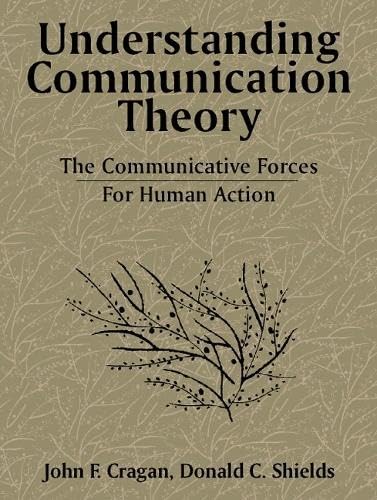
One of the key things to take from Rogers work (and that of Cragan & Shields) is to understand the types of “talk” that occur when an innovation is adopted. Like Maslow’s hierarchy of needs, there is a hierarchy of talk, or human communication associated with the diffusion of an innovation. The talk evolves from awareness (hey, look at that a new blank), to utilization (I’m using the new blank); to opinion (this new blank really freakin’ works); to advocacy (hey, have you used blank? Oh you should, it’s the best darn thing since sliced bread). A real life example for me and my wife is Netflix. We’re Netflix evangelists.

So, what does this mean from a communication and branding perspective? Beyond the basic premise that effective brands or symbolic identities can not be all things to all people (I repeat, can not be all things to all people), your campaign surrounding innovations needs to become more sophisticated in its understanding of the communities you serve, or wish to serve. Your communication needs to be aligned with the elements that resonate with the community. That’s why a simple features and benefits discussion my take you through to awareness, but might not help you get your new product, service or idea to the advocacy stage. Additionally, you should be aware of the sociographic and psychographic components of audience groups across a traditional adoption curve (for example, innovation seekers are different than late majority or active resistors).

Implied in my admittedly simple model, is that the population decreases as you move through the hierarchy of innovation. Many may be aware of an innovation, less have used it, and even fewer will become advocates. But, powerful word of mouth advocacy for your innovation can exponentially increase the productivity of your marketing campaign.

In short, when trying to launch an new product, service or idea be prepared to develop your campaign to meet the needs and expectations across the hierarchy (y-axis) and the adoption curve (x-axis). Avoid the commodity-esque campaign of lather, rinse, repeat which erodes brand equity. The campaign needs to be aligned as the message is amplified for current and potential customers.

Sanctioning Agent’s SymbolicID process and Symbographic research can help you understand the drivers, motivations, symbolic identity and emotion associated with your targeted communities. What are the secret handshakes for your target community? Who are the opinion leaders and cue-givers within that community?

01 February 2006

Commodity Threat Level: Brand Advisory System

The image and text below is based upon an ad that I placed in a recent theatre program. I was hoping to capture the absurdity of the Homeland Security threat level system and highlight the growing threats of commoditization in the brand world.

Image hosting by Photobucket

Current Threat Level
January 23, 2006 – Sanctioning Agent raised the national threat level for brand commoditization in November 2005. The country remains at a high risk, Code Orange, for commodity attack.

Sanctioning Agent will continue to closely monitor and analyze threat information and share that information, together with guidance for protective measures, with non-profit and private sector authorities as well as the general public as part of the sustained national effort to prevent commodity attacks and protect our symbolic brand identities.

Recommended Activities
Everybody should establish a brand identity preparedness kit as well as a communications plan for their organizations, and stay informed about what to do during an emergency brand situation.

Learn More About Brand Preparedness
Visit
Sanctioning Agent

Yum! to sponsor Kentucky Derby


Image hosting by Photobucket

For the locals, this sponsorship deal may make sense with the Louisville connection, but does this make sense for anyone else? I'd say no. Mediocre, low-brow fast food restaurants and the pomp and circumstance of the Derby don't seem to be a congruous fit. Additionally, do you really want to be reminded of horses when you think of Taco Bell? Try our horsemeat, mint julep Gordito -- Yo quiero Giacomo.

I think it's a false start for the organizers.

29 January 2006

Sanctioning Agent’s Blog Schedule - At Least Two Posts Per Week

Hi there and welcome to the official blog for Sanctioning Agent’s Chief Agent, Matt Arnold. I hope that you find the information here interesting and useful (so much so, that you hire Sanctioning Agent for your communication and brand identity projects).

In and effort to provide new content on regular basis, I will try to publish at least two posts per week. One post will highlight Sanctioning Agent’s intellectual capital and/or approach to brand issues; the second post will be my take on current events and trends as they relate to brand and identity work. Of course, I may post more frequently, based on current events or highlighting ways in which traditional marketing and advertising is wasting client money or ways in which marketers and advertisers are doing a great job on the brand front.

Please let me know what you think of the blog – email me at matt-arnold @ SanctioningAgent dot com.

Best regards,
Matt

Brand as Organizing Hub

As brand continues to take on greater gravitas in advertising and marketing discussions, it is important to realize that brand (or symbolic identity, which I use synonymously with brand) should be seen as an organizing hub for organizations. Your organization’s brand identity should organize thought, action, strategy and tactics. For the past few years, I’ve been working on articulating this notion with communication scholar, John Cragan, PhD. This link will take you to one version of our model.

Your brand should be readily identifiable by internal (employees, volunteers, etc.) and external (shareholders, customers, potential customers, etc.) constituents. Brand should help manage expectations and behaviors.

Symbolic Identity should be at the center, serving as the hub, organizing:
• Symbolic Activities
• Structuring Activities
• Informing Activities
• Affiliating Activities

Symbolic Activities – Identity
At this level your brand will influence and be influenced by your symbolic identity structures (or duality of structure) relative to the identity a brand projects, what’s accepted by a given community and what brings a community together (or drives it apart).

Structuring Activities – Management
An organization’s management activities should be led by its brand/symbolic identity. The way the organizations organizes its resources, leads its people and the market and how it decides what’s important.

Informing Activities – Information
Brand identity will also influence the value and perceived currency of information in an organization. The extent to which information is shared, new information is created and the facilitation information structures will be influenced by your brand identity.

Affiliating Activities – Relationships
Symbolic identity also influences relationships in the organization. The identity will help reduce uncertainty on how people relate to each other, resolve problems and judge one another’s value in the organization or symbolic community.

How well does your organization incorporate its symbolic identity into its day-to-day life? A service organization may manage differently than a product company or an educational institution, regardless of the type of the organization it is important that the brand owners realize the influence of the brand and realize that an effective brand cannot be all things to all people.

If you’re interested in real life applications in your organization, contact Sanctioning Agent (email Agent411 @ SanctioningAgent.com).