Two new sites that I’ve found fairly interesting for different reasons:
1. A new real estate valuation site – Zillow (http://www.zillow.com)
2. A new community meets commerce site - Squidoo (www.squidoo.com)
Part of the Squidoo team includes Seth Goodin (Purple Cow, Idea Virus, etc.) and Heath Row (Fast Company). Sanctioning Agent is building a "lens" on Squidoo about symbolic identity.
19 February 2006
16 February 2006
Communicating with Communities: The Importance of Novelty & Redundancy
People have an inherent need to share and organize information about the world around them. Information sharing creates, stabilizes and sometimes, if taken too far, destroys relationships (person to person, person to organization, organization to groups). As humans participating in organizations and communities we seek an optimal level of information to understand our environment and function well in organizations.
Simply stated, optimized information sharing is realized when we balance redundant and novel messages. Redundancy is repeating what is known, and is used to counteract the effects of noise in the communication channel. Redundancy establishes a known foundation for those receiving information and messages (from facts to the oft-repeated symbolic stories, redundancy provides a foundation for current and future communication episodes). However, if there are no new, unique or fresh messages, entropy sets in. That is why we need novel messages - ones that are fresh, distinctive, new or unique.
We need to introduce new things into our systems to keep the system alive. Yet, if there are too many new messages there will be information overload. This is true when it comes to communicating with desired communities and constituencies. What are the accepted beliefs and norms that may be considered "redundant" and what are the novel messages and ideas that will further engage that same group? What foundations are in place to develop a new campaign? What novel messages will make your campaign symbolically unique?
15 February 2006
Presidential $pin
From the GAO via MediaWeek
Green Giant, indeed.
The Bush Administration spent $1.4 billion in taxpayer dollars on 137 contracts with advertising agencies over the past two-and-a-half years, according to a Government Accountability Office report released by House Democrats today.
Green Giant, indeed.
09 February 2006
Not Slippery When Wet – Lexus Misses Mark
A strange campaign from Lexus has made its way into the Minneapolis skyway. What appears to be tire marks on the floor lead up to a sign that looks like a highway warning sign that reads “not slippery when wet.” The tire marks continue to a mounted sign on the skyway sign promoting the new Lexus all-wheel drive model. I hope they didn’t pay too much for this work. Well, frankly, if they paid for it they’ve paid too much. Why would they have their car driving in the skyway and then up a wall? Oh, right, because the skyway is always wet and the car didn’t slip as it drove up the wall. No wait, the warning sign is warning us that it is not slippery when wet. So why do I need an all-wheel drive car? It also looks like the tires ran over the highway sign, so I guess that says something about the powerful engine. The tire marks seem like it was a clown car that may have driven up the wall. I want to leave a fez there in honor of the Shriner that drove up that wall and then disappeared. Perhaps the poor driver missed the Not Yield sign or the Not Stop sign. I expect such poorly executed campaigns from failing behemoths like GM or Northwest airlines.
Next campaign: Lexus we drive you up the wall. All your base are belong to us. Rabbits.
Next campaign: Lexus we drive you up the wall. All your base are belong to us. Rabbits.
08 February 2006
Whopperettes
I've been a big fan of the CPB work for Burger King. I think they've hit another homerun with "The Whopperettes." Great extension from TV to Web. It's unique, it supports the campaign, gets you involved in a Broadway production of Whopper (I wonder if they're in talks with Andrew Lloyd Webber or Joe Mantello) -- helping you make it your way and recalling the nostalgia of "have it your way" and yet they balance that with novelty, so campaign remains fresh too. The King/NFL spots also did a great job of balancing novelty and redundancy -- the old NFL films music (you could almost hear John Facenda's voice), famous football play, and then BAM!!! It's the King via CGI making the big play.
Kudos CPB and BK.
http://www.whopperettes.com
Kudos CPB and BK.
http://www.whopperettes.com
Innovation and the Importance of Understanding Community

A (somewhat) brief thought about the importance of understanding a desired community when launching a new product, idea or service (an innovation). Everett Rogers work on the subject, in my opinion, is still the best. While Geoffrey Moore or Malcolm Gladwell have repackaged some of the ideas, I think Rogers provides the best framework for the understanding of how innovations may or may not be adopted through communities, which may be symbolic or geographic.
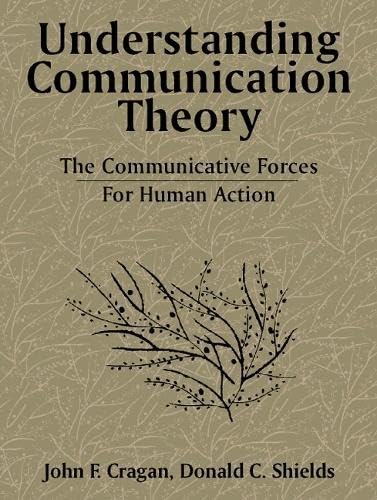
One of the key things to take from Rogers work (and that of Cragan & Shields) is to understand the types of “talk” that occur when an innovation is adopted. Like Maslow’s hierarchy of needs, there is a hierarchy of talk, or human communication associated with the diffusion of an innovation. The talk evolves from awareness (hey, look at that a new blank), to utilization (I’m using the new blank); to opinion (this new blank really freakin’ works); to advocacy (hey, have you used blank? Oh you should, it’s the best darn thing since sliced bread). A real life example for me and my wife is Netflix. We’re Netflix evangelists.
So, what does this mean from a communication and branding perspective? Beyond the basic premise that effective brands or symbolic identities can not be all things to all people (I repeat, can not be all things to all people), your campaign surrounding innovations needs to become more sophisticated in its understanding of the communities you serve, or wish to serve. Your communication needs to be aligned with the elements that resonate with the community. That’s why a simple features and benefits discussion my take you through to awareness, but might not help you get your new product, service or idea to the advocacy stage. Additionally, you should be aware of the sociographic and psychographic components of audience groups across a traditional adoption curve (for example, innovation seekers are different than late majority or active resistors).
Implied in my admittedly simple model, is that the population decreases as you move through the hierarchy of innovation. Many may be aware of an innovation, less have used it, and even fewer will become advocates. But, powerful word of mouth advocacy for your innovation can exponentially increase the productivity of your marketing campaign.
In short, when trying to launch an new product, service or idea be prepared to develop your campaign to meet the needs and expectations across the hierarchy (y-axis) and the adoption curve (x-axis). Avoid the commodity-esque campaign of lather, rinse, repeat which erodes brand equity. The campaign needs to be aligned as the message is amplified for current and potential customers.
Sanctioning Agent’s SymbolicID process and Symbographic research can help you understand the drivers, motivations, symbolic identity and emotion associated with your targeted communities. What are the secret handshakes for your target community? Who are the opinion leaders and cue-givers within that community?
01 February 2006
Commodity Threat Level: Brand Advisory System
The image and text below is based upon an ad that I placed in a recent theatre program. I was hoping to capture the absurdity of the Homeland Security threat level system and highlight the growing threats of commoditization in the brand world.

Current Threat Level
January 23, 2006 – Sanctioning Agent raised the national threat level for brand commoditization in November 2005. The country remains at a high risk, Code Orange, for commodity attack.
Sanctioning Agent will continue to closely monitor and analyze threat information and share that information, together with guidance for protective measures, with non-profit and private sector authorities as well as the general public as part of the sustained national effort to prevent commodity attacks and protect our symbolic brand identities.
Recommended Activities
Everybody should establish a brand identity preparedness kit as well as a communications plan for their organizations, and stay informed about what to do during an emergency brand situation.
Learn More About Brand Preparedness
Visit Sanctioning Agent
Yum! to sponsor Kentucky Derby
I think it's a false start for the organizers.
Subscribe to:
Posts (Atom)