"Search is no longer an add-on consideration for marketers," said Murray. "It is front and center. And while it is a powerful channel on its own, it's clear that its efficacy is multiplied when combined with offline channels."
28 August 2007
Online/Offline & Quality Leads
Offline ads are helping drive online behavior. A recent study from Jupiter and iProspect highlight the positive, symbiotic relationship between online and offline channels, as well as maximizing and optimizing search.
25 June 2007
Be Authentic
Greetings. It’s been a while since the last “Notes from the Field” post. No excuses worth posting – just wanted to acknowledge the fact.
Earlier in the month I was at a First Tuesday luncheon at the Carlson School. Lynn Casey, CEO of PSB, was the speaker. In the name of disclosure, I'm also working with some PSB employees on a web redevelopment effort for a client. Lynn spoke about how internet-enabled technology is (re-)defining PR. It was a good talk. I’m paraphrasing here, but the speed of the Internet is further forcing authenticity -- if one is going to ground and maintain a unique symbolic identity, they have to be authentic. The Internet, and consumer generated content, are Toto (the dog, not the band) to the digital image curtain.
A couple of take-aways:
1) Gen Xrs & Echo Boomers are now spending more time on the internet than watching TV. Does your marketing spend and/or understanding of media match this?
2) Be authentic if you want to protect your brand/symbolic ID.
Earlier in the month I was at a First Tuesday luncheon at the Carlson School. Lynn Casey, CEO of PSB, was the speaker. In the name of disclosure, I'm also working with some PSB employees on a web redevelopment effort for a client. Lynn spoke about how internet-enabled technology is (re-)defining PR. It was a good talk. I’m paraphrasing here, but the speed of the Internet is further forcing authenticity -- if one is going to ground and maintain a unique symbolic identity, they have to be authentic. The Internet, and consumer generated content, are Toto (the dog, not the band) to the digital image curtain.
A couple of take-aways:
1) Gen Xrs & Echo Boomers are now spending more time on the internet than watching TV. Does your marketing spend and/or understanding of media match this?
2) Be authentic if you want to protect your brand/symbolic ID.
04 June 2007
New York Economics
New York magazine has an interesting piece on economics of NYC. Want to know the basic business model for a pizza joint, the MOMA, a sex shop or the Yankees. You can find out here.
(via 37 Signals & Kottke)
(via 37 Signals & Kottke)
Subway Dissonance
Over the past few weeks, I’ve noticed some strange advertising choices for Subway. Subway over the past few years, primarily through Jared, have worked to differentiate themselves as a healthy alternative to traditional fast food. Beyond the sandwich having less fat (their qualified claim when there’s no cheese, oil, or mayo on your sub) than a Big Mac, Subway is now promoting ways to have a healthier meal – complimenting your sandwich with fruit and milk, rather than chips and soda. This makes sense to me. However, during the same television program I saw two Subway spots. The first one had Jared talking to little leaguers about Subways smart choice meals or fresh fit, or something like that – basically, “hey kids, don’t get fat, eat smart.” Less than twenty minutes later, Subway has another add that promotes a ginormous sandwich – so big they’re not sure how you’ll eat it. One is a steak and cheese sandwich – lots and lots of gooey, fat-laden cheese. This spot seems to say "you've given up on eating health, you’re happier when you’re full – chow down Sumo Sam!” The messaging creates a disconnect, even if the spots are hours apart, but minutes apart creates a fair amount of dissonance. So, I wonder what does Subway stand for? Their positioning doesn’t seem to ring true. Not only was a ball dropped on the creation of competing identities, another one was dropped by those doing the media buys and placement.
15 May 2007
Big Seed?
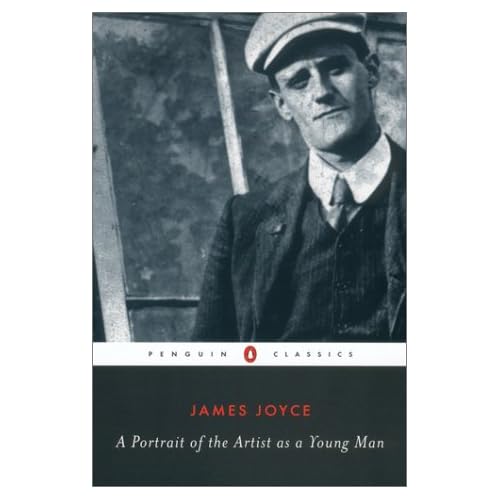
I recently listened to Duncan Watts on the HBR IdeaCast (a podcast from Harvard Business Review). An online executive summary addressing the same topic can be seen here. Watts, Sociology Prof at Columbia, claims the epidemic analogy is flawed, using the simple equation to illustrate if the infection (reproduction) rate is greater than one. While the use and application of viral has been flawed, it is unfortunate that Watts brings forth a seemingly more flawed analogy to present a novel idea to promote his research. Watts does a good job of simplifying his approach and gives part of the description of an epidemic - if growth is greater than one than the spread can be exponential; if less than one, the spread will burn out. As readers of the blog know, I see “viral” misused or misunderstood by many marketers and advertisers that want the benefits of viral campaigns, but not sure how to fuel the campaign. However, I don’t need it replaced by one equally or more flawed. For me, viral is to big seed as Catholic is to Protestant in Portrait of the Artist when Cranly asks Stephen if he intends to become a Protestant:
I said that I had lost the faith, Stephen answered, but not that I had lost self-respect. What kind of liberation would that be to forsake an absurdity which is logical and coherent and to embrace one which is illogical and incoherent?Watts looks to introduce "Big Seed” marketing – basically, viral + augmented campaign. Not a bad idea, but a bit more illogical and incoherent than viral.
I don’t disagree with Watts – yet, Big Seed is a bit flawed as well, and perhaps as overly simplified has he’s portrayed viral. From a “viral” standpoint, big seed isn’t as descriptive or easy to share (reproduce). What Watts fails to mention, at least in the interview, is a notion of time, or lifecycle for the seed or epidemic, and what percentage of a population is infected, and what the growth rate/reproduction rate of the population as a whole. Additionally, big seed doesn’t address the concept of inoculation. Given what’s missing, I think viral is a more accurate and easy to share analogy to understand the organic, potentially infectious, nature of messages, ideas, and symbolic identities.
Communication messages and campaigns can be augmented by “viral” efforts. Viral alone is not sufficient. But then again, I "have read little and understand less.”
Dr. Z: Lose a few billion and call me in May

An interesting conclusion to the Daimler-Chrysler saga – less than ten years ago Daimler (known for premier cars and large trucks) bought Chrysler for $36 Billion. Now, Daimler sold 80% of Chrysler to a private company, Cerberus, for less than $8 Billion.
I’m not saying this is a bad move looking forward – you don’t want to throw good money after bad, but man is this humiliating for both parties. This is another real and symbolic blow to the American auto industry. One of the most prestigious automakers in the world spends nine years with you and says we’re willing to lose billions on this if you just take it off our hands. How will the brand be perceived moving forward?
Daimler will shed itself of the pension responsibilities of Chrysler and refocus on its strengths. Chrysler and Cerberus will need to get all three heads of that dog barking and heading in the same direction to help reestablish the remaining Chrysler brands (Chrysler, Dodge, Jeep, etc.).
So, what would be more interesting ways to spend (lose) $26 Billion over a decade? I used to think that when you’re in a position to make million-dollar mistakes you’ve really made it. This really makes me reconsider and resets that bar.
Dr. Z, please send $500 Million, if there’s no ROI in nine years, you’re only out $.5 Billion.
10 May 2007
Culture Jamming
Culture Jamming & The Importance of Owning Your Identity
Through acts of cultural jamming we can see how one’s symbolic identity (and its acceptance by the public) are at risk if it is not authentic and grounded. Culture Jamming, according to Wikipedia, “is an act that transforms existing mass media to produce commentary about itself, using the original medium’s communication method.” I see it as guerilla marketing that usurps the dominant or intended message with an alternate message – which may be more succinctly described as negative-chaining. Cultural jamming disrupts the one-way channel of advertising. Sometimes this may be cute and clever without much damage, eliciting a laugh or a chuckle from an audience member. On the other hand it can be much more damaging actually devalue the symbolic currency of one’s identity through negative-chaining.
Culture jamming is another example of the new media age changing the game – not just the media channels and the speed at which those channels can deliver messages, but the ease of others to possess the tools and skills to hijack a message. This reinforces the need for your identity to be authentic and grounded. You need to walk the talk. If not your message is more susceptible to falling prey to cultural jammers. Mind you, the cultural jammers aren’t simple graffiti artists or vandals – while some may argue they are. They are cleverly coopting media and transferring ownership of the message. They are not doing it as a simple mark of physical territory like a gang member might do. And, they aren’t the Allen Funts or Ashton Kutchers of the world –they don’t want to take advantage of individuals. Instead, their targets are corporations and media channels. It is the corporation that is on Candid Camera and it is the less than diligent media that is Punk’d. Check out Joey Skaggs rules on who’s fair game to better understand this point.
While doing more research on Ji Lee’s Bubble Project, I came upon more interesting pranks and cultural jamming examples… flash mobs, Joey Skaggs, billboard liberation front etc (last year I had a post about flash mobs fizzling when advertisers tried to coopt them). You can see the absent-minded media running with a story like it’s a ham sandwich – wait ham sandwiches don’t run, but this story had legs.
In my opinion, a great example of cultural jamming comes form the Yes Men and their Dow Ethics incident - see the Bhopal and HUD sections of fake news created a real event. News outlets thought the Yes Men were Dow representatives and that Dow was going to make reparations for it’s chemical disaster in Bhopal. This in turn caused the real Dow spokes people to restate their rather unsavory position regarding the Bhopal disaster refreshed collective image of the tragedy and reminded the public image of a cold corporation.
There is an artistic/creative/novel element at play here. With all forms of communication and entertainment, artistry is needed to engage the audience. Sometimes the culture jamming artistry breathes new life into seemingly dormant dramas or it creates negative-chaining, as the seeds for a symbolic vision’s destruction are sown in it’s genesis. Once a particular story violates the here-and-now or is seen to be inauthentic, a vision is on the express path to implosion.
As I mentioned earlier, there is a guerilla nature to this kind of media expression. I see it as a flip to when advertisers try to grab onto a new media or segment only to have it backfire because the audience knows it is not authentic. Some recent examples are flogs (fake blogs) or the corporate sponsored flash mobs that failed to ignite interest. Successful culture jammers are able to disrupt the flow of information (in the least) and if done correctly can make once propagandic, one-way message awake our critical thinking and re-evaluate a product or service.
The risk for being a victim of jamming, much like the risk of running failed guerilla marketing campaigns, increases in relation to your inauthenticity and inability to ground your identity.
Now those that worship at the shrine of advertising will still argue that any buzz is good buzz. I think that ‘s only true in the gossip/tabloid/celebrity hype machine. It surely isn’t the case in politics, products, or services. Ask the Dow PR team about the buzz generated by the Yes Men.
The speed of today’s media reinforces the need to have an authentic, grounded identity.
Through acts of cultural jamming we can see how one’s symbolic identity (and its acceptance by the public) are at risk if it is not authentic and grounded. Culture Jamming, according to Wikipedia, “is an act that transforms existing mass media to produce commentary about itself, using the original medium’s communication method.” I see it as guerilla marketing that usurps the dominant or intended message with an alternate message – which may be more succinctly described as negative-chaining. Cultural jamming disrupts the one-way channel of advertising. Sometimes this may be cute and clever without much damage, eliciting a laugh or a chuckle from an audience member. On the other hand it can be much more damaging actually devalue the symbolic currency of one’s identity through negative-chaining.
Culture jamming is another example of the new media age changing the game – not just the media channels and the speed at which those channels can deliver messages, but the ease of others to possess the tools and skills to hijack a message. This reinforces the need for your identity to be authentic and grounded. You need to walk the talk. If not your message is more susceptible to falling prey to cultural jammers. Mind you, the cultural jammers aren’t simple graffiti artists or vandals – while some may argue they are. They are cleverly coopting media and transferring ownership of the message. They are not doing it as a simple mark of physical territory like a gang member might do. And, they aren’t the Allen Funts or Ashton Kutchers of the world –they don’t want to take advantage of individuals. Instead, their targets are corporations and media channels. It is the corporation that is on Candid Camera and it is the less than diligent media that is Punk’d. Check out Joey Skaggs rules on who’s fair game to better understand this point.
While doing more research on Ji Lee’s Bubble Project, I came upon more interesting pranks and cultural jamming examples… flash mobs, Joey Skaggs, billboard liberation front etc (last year I had a post about flash mobs fizzling when advertisers tried to coopt them). You can see the absent-minded media running with a story like it’s a ham sandwich – wait ham sandwiches don’t run, but this story had legs.
In my opinion, a great example of cultural jamming comes form the Yes Men and their Dow Ethics incident - see the Bhopal and HUD sections of fake news created a real event. News outlets thought the Yes Men were Dow representatives and that Dow was going to make reparations for it’s chemical disaster in Bhopal. This in turn caused the real Dow spokes people to restate their rather unsavory position regarding the Bhopal disaster refreshed collective image of the tragedy and reminded the public image of a cold corporation.
There is an artistic/creative/novel element at play here. With all forms of communication and entertainment, artistry is needed to engage the audience. Sometimes the culture jamming artistry breathes new life into seemingly dormant dramas or it creates negative-chaining, as the seeds for a symbolic vision’s destruction are sown in it’s genesis. Once a particular story violates the here-and-now or is seen to be inauthentic, a vision is on the express path to implosion.
As I mentioned earlier, there is a guerilla nature to this kind of media expression. I see it as a flip to when advertisers try to grab onto a new media or segment only to have it backfire because the audience knows it is not authentic. Some recent examples are flogs (fake blogs) or the corporate sponsored flash mobs that failed to ignite interest. Successful culture jammers are able to disrupt the flow of information (in the least) and if done correctly can make once propagandic, one-way message awake our critical thinking and re-evaluate a product or service.
The risk for being a victim of jamming, much like the risk of running failed guerilla marketing campaigns, increases in relation to your inauthenticity and inability to ground your identity.
Now those that worship at the shrine of advertising will still argue that any buzz is good buzz. I think that ‘s only true in the gossip/tabloid/celebrity hype machine. It surely isn’t the case in politics, products, or services. Ask the Dow PR team about the buzz generated by the Yes Men.
The speed of today’s media reinforces the need to have an authentic, grounded identity.
03 May 2007
Interview with MNODN
I was recently interviewed for Voices, the monthly newsletter of the Minnesota Organization Development Network (MNODN). As part of their Thought Leader section, I was asked about SCT and how it can be applied in an organizational setting.
Thanks to Chris for the interview and doing a great job of distilling my ramblings.
Thanks to Chris for the interview and doing a great job of distilling my ramblings.
Subscribe to:
Posts (Atom)