08 September 2006

Why It Matters: Branding Iron

In the latest edition of Why It Matters, Hoag Levins interviews William Jeanes, the co-author of the new book Branding Iron. Jeanes is the former editor of Car And Driver. Branding Iron looks at the identity problems plaguing the U.S. auto industry.

Here’s a snip-it from the interview that I found the most interesting:

“In your book you say ‘the car business spends more on consumer research than any endeavor other than politics. Much of its research is syndicated and available to everyone – buyers studies, shopper studies, consumer satisfaction index, etc.’ And what that makes me wonder is that if all the car companies are creating brand identities based on exactly the same study data, how can any of them expect to have products that stand out from each other.”
Jeanes argues that courage is what’s missing. The courage to say that we’re all playing in a ‘me too’ environment and failing to connect with consumers in a meaningful way. You can hear more on the AdAge/Why It Matters site.

It sounds like the U.S. auto industry is more of a commodity industry than many execs care to admit. A sign that you’re in a commodity industry, when prices and financing options are the key points in your commercial. Another sign, a loss of your consumer advocates and repeat buyers. Jeanes says that a brand is a promise wrapped in an experience. In other words, advertising does not equal successful brand building.

Many people may want to blame market research and a dysfunctional addiction to research... and for the most part that’s fair. Research, like computer programs, is a garbage in, garbage out endgame. What are you doing to ensure that you are asking the right questions and segmenting your market in meaningful ways? What are doing to cultivate and ground a unique symbolic identity?

07 September 2006

All Symbolic Identities Have Shelf Lives

All symbolic identities have a shelf life here's a perspective from Seth Godin. I may explore this topic in greater detail on "Notes From the Field" in the future.

05 September 2006

Lovemarks nets a $430 million fan


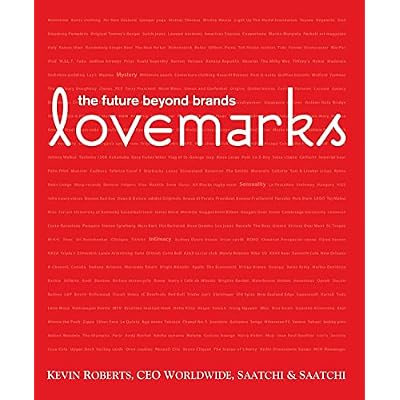
AdAge reports that Kevin Roberts, CEO Saatchi & Saatchi, and his book Lovemarks wooed JC Penny away from DDB Chicago. I had read Lovemarks last winter and thought it was OK, but reread it after I saw the AdAge piece. If that’s worth $430 million, I can start highlighting ideas on my blog that should be worth a few million a pop.

I stand by my “ok” assessment on my first read. The book is interesting, more so for its presentation and graphics than the content. The premise is that emotional connections with customers are what make a relationship between customer and product/service. No big news there, emotional connections are important. Roberts argues that love is the top emotion and claims that the future beyond brands is lovemarks. I’m still a bit befuddled by the future beyond brands, but what’s a book subtitle if not provocative.

Roberts seems to treat the concept of a brand more as a commodity. I think he’s wrong in doing that. I concede that many marketing people try formulaic approaches and pseudo-science which treats consumers more like sheep than humans. Hello Dolly! However, lovemark is really just a strong brand or symbolic identity.

I too try to stay away from the term brands at times, saying that what a person or organization is striving for is a unique symbolic identity. While I agree that emotion is critical in winning the hearts, then the minds (it’s easier to find reason afterwards), it’s more than emotion when it comes to a winning symbolic identity. Unique symbolic identities address human meaning, motive, identity, and emotion. As I mentioned in my critique of Primal Branding, emotion is necessary but not sufficient in developing and grounding a unique identity.

Roberts talks about love, or lovemarks, being comprised of mystery, sensuality, and intimacy. This is where I think Roberts provides strong insight into human connections to brands, lovemarks, or symbolic identities. When he talks about mystery, he’s referring to great stories, myths, dreams, and icons. When he talks about sensuality, he’s referring to the senses – sound, sight, smell, touch, and taste. When it comes to intimacy, Roberts, says that’s “commitment, empathy, passion.” These are important concepts for marketers to consider as they fight the evils of commoditization.

In the cocktail version of the lovemarks story, presented as a photo of cocktail napkin, Roberts shows that at heart he’s really a social scientist as he presents a two-by-two matrix, with one axis as love (low and high) and the other axis as respect (again high or low). In the desired quadrant of high respect and high love, you have a lovemark, the exact opposite of a commodity. Again, I think that lovemark is synonymous with a winning brand or symbolic identity. Interestingly enough, Roberts has fads as low respect, high love. I agree with that assessment, but wished he would have dug a little deeper into the shelf life of fads, or all symbol systems and identities. They will all expire. I’m not sure if Mr. Roberts sees that with lovemarks.

In addition to a discussion of the shelf life of an idea or lovemark, I would have liked for Roberts to separate awareness from advocacy. I see so many marketers talk about awareness and buzz as if it’s all good. It is not. You need awareness, but awareness alone does not constitute success.

You can read more on the lovemarks site.

27 August 2006

Starbury: New Basketball Shoes for $14.98

Stephon Marbury, guard for the New York Knicks is endorsing a new shoe called Starbury. The shoe share his nickname. Instead of the standard $100 - $200 pricepoint for standard NBA star-endorsed shoes, the new Starbury will retail for $14.98. More details can be found at ESPN

While Marbury may not have the universal appeal of Jordan, or D-Wade, the price should be right for many. Marbury and those around him claim the shoe is the same as the more expensive shoes. (I can’t find a site or citation, but on ESPN's Outside The Lines today, the story claimed the designers for Starbury are the same as those used by Nike for their more expensive sneakers).

Marbury and the Starbury play to a pragmatic drama (more bang for the buck). Will it catch on? I’m curious to see how this one plays out - beyond the business and brand element, I find the social and cultural potential fascinating. Marbury states he’ll be wearing these shoes in the up coming season.

The pricing strategy here should be another lesson in brands – price and features can be duplicated, the emotional connection and symbolic identity cannot. The Starbury provides a pragmatic drama in the world of basketball shoes.

23 August 2006

Why So Many Automotive Ad Strategies Miss the Mark

While Al (and Laura) missed the mark on divergence, I agree with him on automotive advertising. This insight goes beyond the auto industry.

Two key points:
1. The strategy and tactics need to support your goal:
Copywriter Julian Koenig once said, "Your job is to reveal how good your product is, not how good you are."


2. The message needs to be geared for the right audience:
Selling to boardroom rather than consumer. It used to be that the objective of an advertisement was to sell something to a consumer. Today, the real selling takes place in the boardroom, where the agency tries to sell the advertising to the client.

21 August 2006

Improv & Innovation: The Power of Yes

While working on a change management and communication project for a client, we were discussing ways in which one (or teams) can build trust. I had discussed the improv approach. I used to write sketch comedy in college and my wife was in a touring improv group for four years. One of the basic tenants of improv is to say yes to an idea first, rather than no. Instead of playing whack-a-mole when it comes to creativity, try saying yes and building on an idea. It may seem simple, but it can have transformative effects when it comes to innovation, trust-building, and team-building.

Get to the point already. I didn’t say it helps you to be succinct. You can read more about improv and innovation in John Sweeny’s book Innovation at the Speed of Laughter. Also, check out this video of John Sweeny presenting. Your next presentation might just seem a whole lot easier.

20 August 2006

Get the RSS on the BS of 2.0

Generated Image

Via Digg, I found this Web 2.0 BS generator. From there, I was able to create this sexy new Web 2.0 compliant logo.

17 August 2006

Wize.Com: The wisdom of algorithms and aggregated reviews

Wize, a new product review site, released its beta today. The site is a service centred around their Wize Rank™, which is based upon the theses from The Wisdom of Crowds and The Pardox of Choice. Check it out.

From the Wize.Com beta site:

Wize Rank™
Wize Rank is an objective measure of collective wisdom from hundreds of thousands of reviews from thousands of sites across the internet.

We are constantly compiling review data, using our proprietary algorithm to objectively rate products from zero to 100. Because we believe in the value of collective wisdom, a product needs at least five reviews to receive a Wize Rank. As more reviews are added, the Wize Rank becomes more accurate. Vastly simplified, our formula looks like this:

Expert Reviews + User Reviews + Buzz = Wize Rank
Wize Rank does not play favorites - manufacturers and advertisers can't buy a higher rating. The only thing that can improve a Wize Rank is more positive data collected from independent sources.

Is the top ranked product always the best for you? No. Although the top 5 ranked products are generally great, you may find a lower-ranked product that's right for you. Reading what reviewers are saying can help you understand more specific information about a product, and can help you make the right purchasing decision.
Our goal is to help you quickly find the products that are right for you. We think the best way to do that is to highlight the top performers in each category, and to allow you to dig into the detail.